

Industrial Robotics and Engineering
Automated processes, integrated systems.
Industrial precision, circular thinking
Automated processes for an integrated system.
We automate injection, sorting, logistics, and industrial handling with advanced robotics. Greater efficiency, greater precision, greater safety.
And we do it from within, with real process knowledge, not from a catalog of prefabricated solutions.
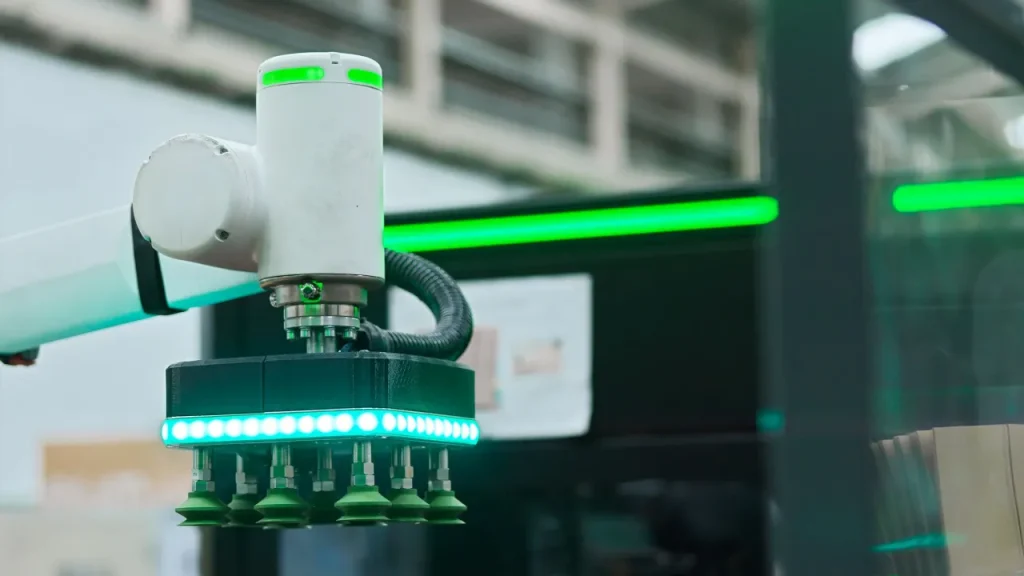
Industrial Automation Solutions: Our Approach to Projects
At Erum Group, we develop industrial automation solutions based on a deep understanding of production processes. We design, adapt, and integrate technology, whether proprietary or from the market, to optimize operations comprehensively.
We automate complete lines by combining standard solutions and specific developments, acting as a global project integrator and coordinating specialized technologies and partners, forming alliances with companies specializing in engineering and robotics when necessary to offer the best technical solution.
The key lies in our approach: we start with the process, not the technology. This allows us not only to automate but also to improve the efficiency, performance, and quality of the entire operation.
Automation projects we undertake:
- Production line automation: robotic extraction, machine feeding, and automatic palletizing
- Sorting and selection systems: optical technologies, advanced sensing, and artificial vision
- Recycling process automation: material sorting, polymer identification, and in-line quality control
- Industrial handling: assembly, collaborative robots, and automated cell design
- Industrial system integration: connection between machinery, software, and process control
- Automation feasibility analysis: technical studies, ROI evaluation, and implementation roadmap definition
- Optimization of existing lines: improvement of production cycles, waste reduction, and OEE increase
Industrial Robotics Integrated into Circular Processes: The Erum Group Vision
Robotics is in our DNA.
Optimizing operational flows, minimizing errors, reducing waste, and maximizing every resource: these are the objectives that guide our robotic integration, both in our own plants and in the projects we develop for clients.
We possess real industrial knowledge, production experience, and in-house technological development capabilities. This know-how is applied with a strategic vision to design automation systems that work in practice, not just on paper.
What we offer that a conventional automation company cannot:
- First-hand knowledge of the process to be automated: injection, recycling, sorting, logistics
- End-to-end vision: we don’t automate a cell, we optimize the entire production system
- Experience in demanding industrial environments and continuous production
- Integration with circularity criteria: automation that reduces waste and improves material traceability
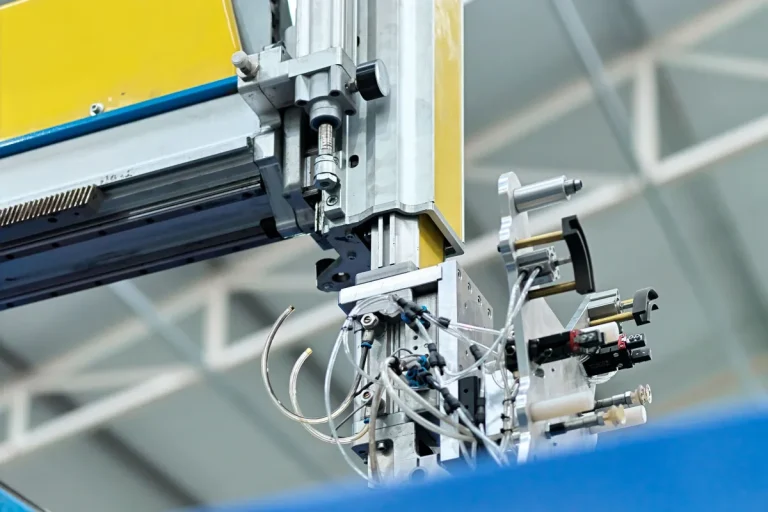
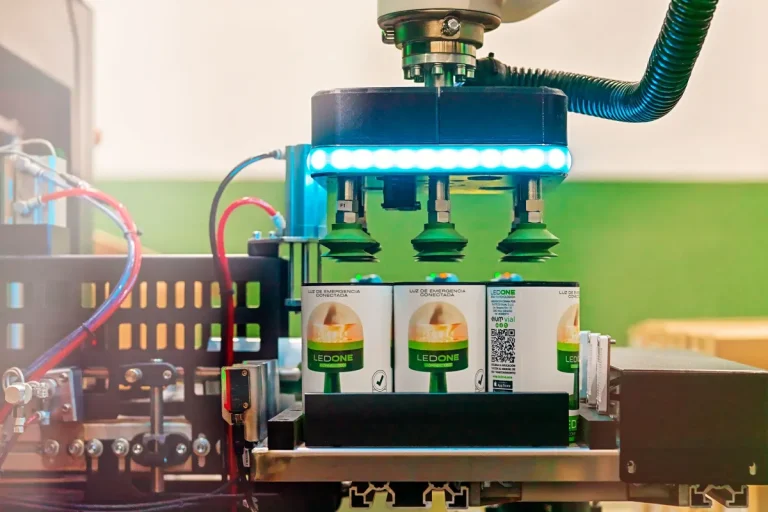
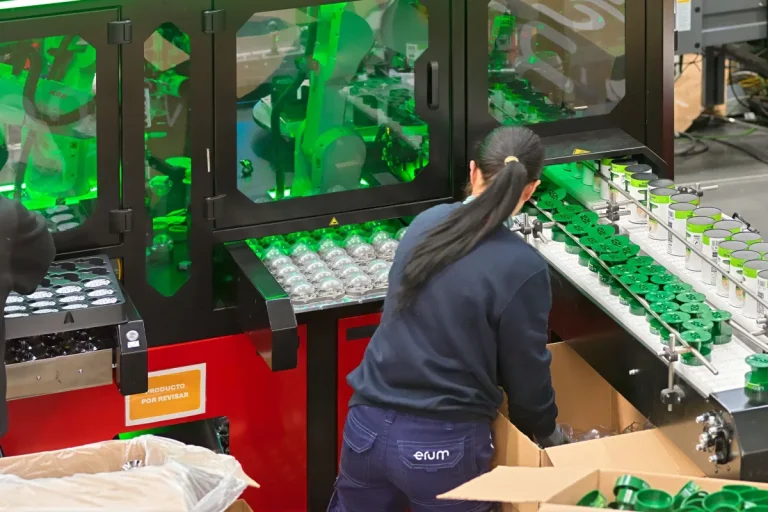
What your plant gains with an industrial automation project
Well-implemented industrial automation is not an expense; it’s a lever for competitiveness with measurable returns.
Results generated by Erum Group automation projects:
- Productivity: Improved efficiency and cost reduction.
- Precision and repeatability: elimination of human variability in critical quality tasks
- Safety: removal of operators from tasks with ergonomic risks or material exposure
- Waste reduction: real-time process control that detects deviations before they generate rejects
- Scalability: ability to increase volume without proportionally increasing staff
- Traceability: automatic recording of process parameters for quality control and reporting
Industrial Automation in the Sectors Where We Operate
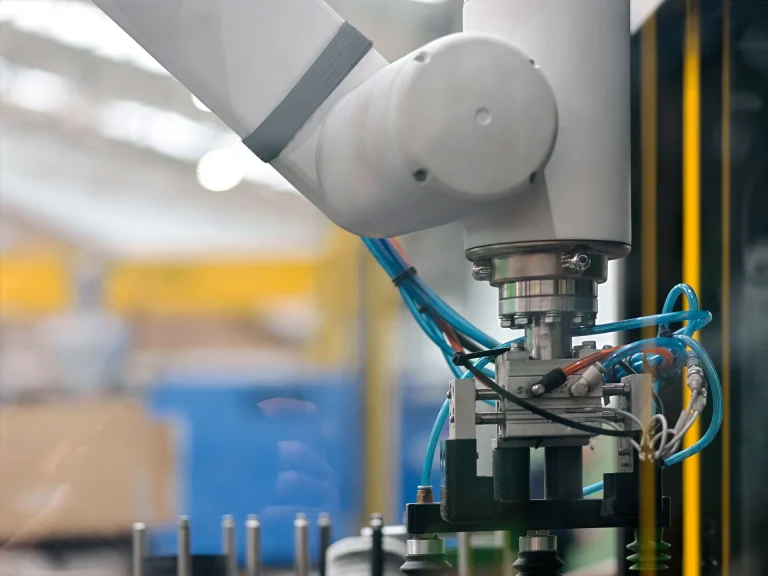
We apply industrial robotics and automation systems in the production environments we know best:
- Plastic injection: automation of extraction, forming, in-line quality control, and palletizing
- Recycling and material sorting: optical sorting systems by polymer, recycled granulate quality control
- Retail and industrial logistics: product handling, order picking, and automated warehouse management
- Automotive: robotic cells for plastic components, dimensional control, and assembly
- Road safety: automation of manufacturing for signage and beaconing elements
- Packaging: automated filling, sealing, labeling, and palletizing lines
How We Approach an Industrial Automation Project
At Erum Group, we approach automation projects with a structured methodology, focused on industrial impact, efficiency, and scalability:
- Diagnosis and business case definition. Analysis of the current situation and identification of automation opportunities, defining key KPIs and project economic viability.
- Technical solution design. Definition of the automation solution, technology selection, and integration with existing processes and machinery.
- Industrialization and integration. Implementation of the automated solution, integration with control systems, and validation in a production environment.
- Commissioning. Line startup, measurement of results against objectives, and adjustment of deviations.
- Training and transfer. Team training and definition of operational standards to ensure autonomy and continuity.
- Continuous improvement. Performance monitoring and progressive process optimization, with the possibility of scaling to new lines or plants.
Frequently Asked Questions about Industrial Robotics and Automation
What is industrial automation?
It is the application of technology, robotics, sensing, control software, and integrated systems to execute production processes for greater competitiveness, speed, precision, and repeatability.
Do you manufacture robots or are you integrators?
We are integrators with our own industrial knowledge. We do not manufacture robots; we select the most suitable technology for each project and handle the integration engineering, commissioning, and follow-up. This gives us manufacturer independence and flexibility to choose the optimal solution in each case.
How does Erum Group differ from other automation companies?
The main difference is process knowledge. Conventional automation companies know the machine. Erum Group knows the process to be automated: injection, recycling, sorting, logistics. This allows us to design systems that work under real production conditions, not just in the controlled environment of commissioning.
How long does an industrial automation project take?
It depends on the scope. A feasibility analysis can be completed in 2-4 weeks. An automation project for a robotic cell typically requires 3 to 6 months from design to production validation. Larger scope projects (complete lines, system integration) require 6-18 months of planning.
Can you automate recycling or material sorting lines?
Yes. It is one of our specialties: optical sorting systems by polymer, quality control of recycled granulate, and automation of extrusion lines. We combine knowledge of recycling processes with automation engineering to design systems that work with recycled materials, which have greater variability than virgin materials.