

Sustainable plastic injection moulding
Sustainable injection so our philosophy doesn't fall short
We have designed the process from the outset so that efficiency, quality, and circularity advance together and form part of the same production system. Thus, each plastic injection process integrates advanced technology, operational control, and sustainability criteria applied on an industrial scale.
We drive our clients’ industrial and sustainability objectives with sustainable plastic injection based on recycled materials.
We contribute to meeting ESG criteria, ensure traceability through certifications such as GRS and UNE-EN 15343, and strengthen supply chain stability.

Plastic injection molding: industrial manufacturing with recycled material
Injection molding is the benchmark manufacturing process for plastic parts in medium and large series, as it allows for working with technically demanding parts, with tight tolerances and repeatability. At Erum Group, we apply this process with a differential approach: we integrate certified recycled plastic into our injection processes, combined with materials that guarantee the technical requirements of each application, partly sourced from our own recycling chain.
What we do in plastic injection:
- Injection of recycled thermoplastics: rPP, rPS, rABS, rHDPE
- Technical parts for demanding sectors: retail, automotive, home, packaging, road safety
- Elements with advanced technical requirements and tight tolerances
- Certified traceability from waste to final part
- Subcontracting capacity: industrial alliances, licenses, and third-party manufacturing
Injection technology: precision, automation, and process control
At Erum Group, we use cutting-edge technology and real-time monitoring to optimize our injection processes. Through advanced machinery and intelligent automation, we guarantee precision and consistent quality. This allows us to efficiently work with parts that have advanced technical requirements, reducing consumption and maximizing material performance in the face of current industrial challenges.
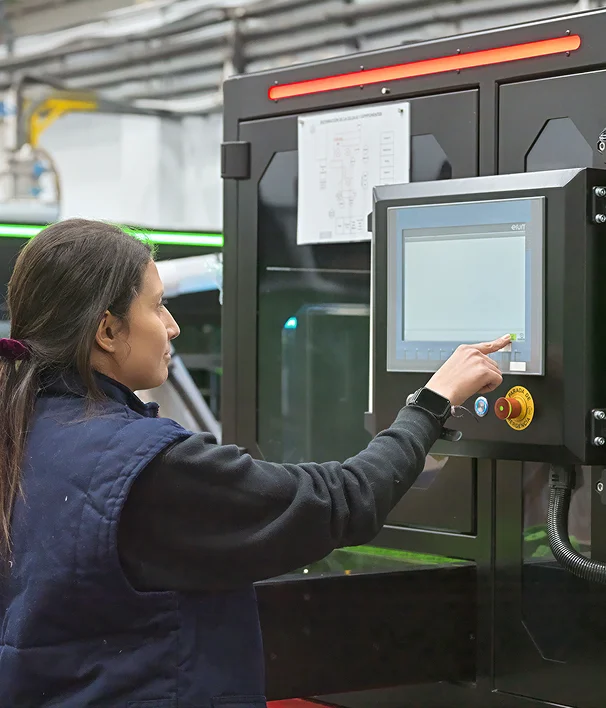
Process control does not end at the machine. Every injection parameter, such as temperature, pressure, cycle time, and filling speed, is monitored and adjusted to ensure process stability. Because process consistency is what guarantees product quality and uniformity, regardless of the input material.
Technical capabilities:
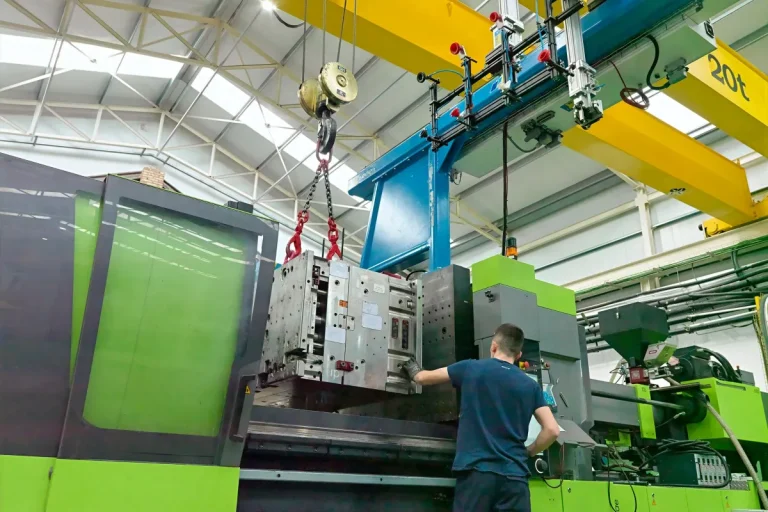
- High-tonnage injection presses for large-format parts
- Real-time monitoring of process parameters
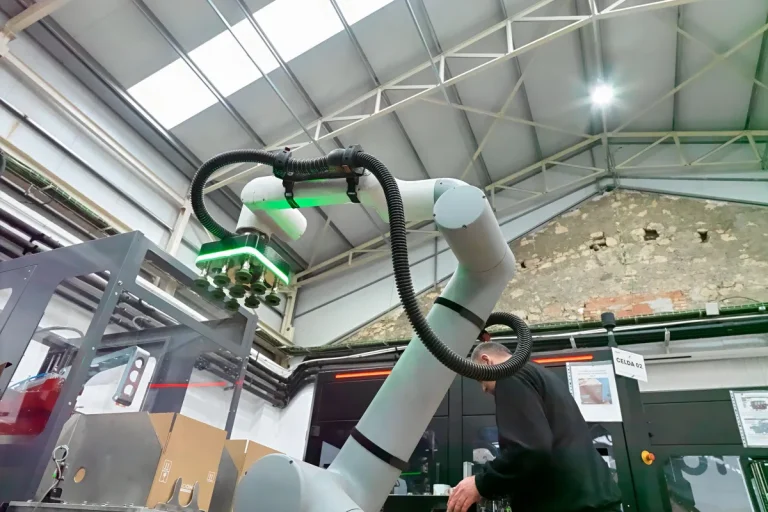
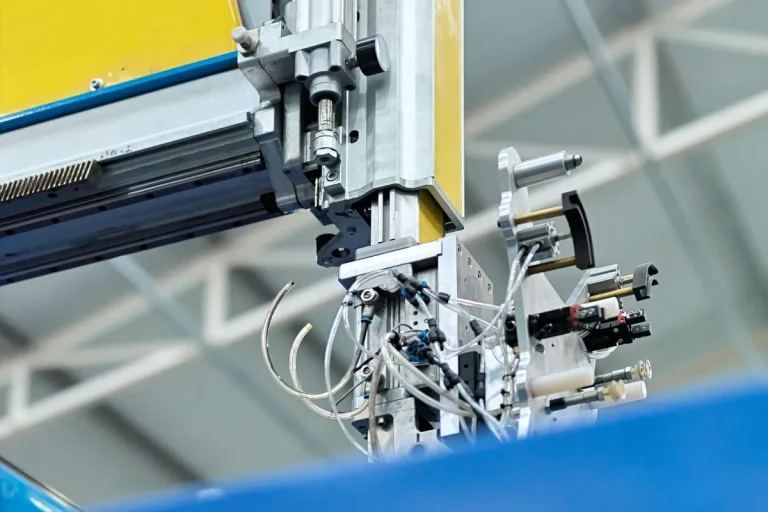
- Automation: robotic extraction, automatic feeding, in-line quality control
- Ability to work with recycled materials of different melt flow indexes (MFI)
- In-house tooling and management of third-party injection molds
Producing better, using fewer resources
At Erum Group, we drive sustainable injection based on the intelligent use of energy and resource optimization. We integrate renewable energies to improve our operational performance and reduce environmental footprint. By producing with fewer resources, we generate sustained value and strengthen our industrial competitiveness.
Recycled plastic injection: materials, certifications, and traceability
The recycled material we process in our injection lines is part of a controlled supply chain that allows us to ensure its quality at all stages, from origin to end. This means we control the quality of the material from the initial waste to the granulate entering the press, and from there to the final part.
We work with post-consumer and post-industrial recycled thermoplastics, certified according to recognized standards such as GRS (Global Recycled Standard) and UNE-EN 15343, which reliably accredit the recycled content.
Available injection materials:
- rPP (recycled polypropylene). The most demanded thermoplastic in retail, home, and packaging
- rPS (recycled polystyrene). Technical household goods and industrial components
- rABS (recycled ABS). Automotive components, electronics, and industry
- rPE / rHDPE (recycled polyethylene). Technical and industrial packaging
Quality control and traceability: from waste to certified part
To control is to understand. We integrate quality control at each stage of the production process to guarantee stability, precision, and repeatability.
We ensure material traceability from its origin to the final part, providing reliability in demanding applications.
We work according to recognized standards, which allows for verification of recycled content, the process, and compliance with technical and regulatory requirements.
What we control and document in each batch:
- Origin and certification of recycled material (GRS, UNE-EN 15343)
- Injection process parameters: temperature, pressure, cycle time
- Mechanical properties of the part: tensile strength, impact, hardness
- Dimensional: verification of tolerances according to client drawing
- Recycled content verified per batch, suitable for ESG reporting
Industrial capacity: volume, sectors, and collaboration models
We have a network of production plants designed to operate with large volumes, guaranteeing stability and repeatability. Our structure allows us to scale efficient and sustainable solutions, adapting to diverse sectors and geometries. Thus, we respond to our clients’ demands and, above all, support them in their growth.
Available collaboration models:
- Injection subcontracting: manufacturing of parts from client molds and specifications
- Industrial alliances: joint product development, co-design, and co-manufacturing
- Process licenses: access to our technology and know-how in injection with recycled material
Sectors where we operate:
- Retail and large distribution — over 80 years manufacturing hangers and display items
- Automotive — technical components with rABS and rPP, traceability for OEMs
- Home and consumer goods — buckets, organizers, kitchenware with rPP and rPS
- Packaging — technical packaging with certified recycled content
- Road safety — signaling and beaconing elements with recycled material
Frequently asked questions about sustainable plastic injection
What is sustainable plastic injection?
Sustainable plastic injection is the injection molding process that uses certified recycled materials instead of virgin plastic, maintaining the necessary mechanical properties and dimensional quality for demanding industrial applications. At Erum Group, the sustainability of the process is accredited by certifications such as GRS, which guarantee the traceability of recycled content from waste to the final part.
Do parts injected with recycled material have the same properties as those with virgin material?
Yes, for most industrial applications. Rigorous control of input material (classification, washing, extrusion, MFI control, and mechanical properties) allows us to guarantee property stability batch to batch. For applications with very specific technical requirements, we can develop custom compounds or blends.
Can you manufacture parts from client's own molds?
Yes. We work with injection molds provided by the client. We manage the tooling, perform process validation tests with recycled material, and deliver process and quality documentation per batch.
What certifications support the recycled content of the parts?
Parts injected at Erum Group can be certified under GRS (Global Recycled Standard) and UNE-EN 15343, the two reference standards for verifiable recycled content.
Do you offer injection subcontracting services?
Yes. We have subcontracting capacity for industrial manufacturers who need injected plastic parts adapted to their technical requirements, both with recycled material and with other solutions depending on the application. We work on both one-off projects and recurring supply agreements. We also explore industrial alliances, process licenses, and co-manufacturing for larger-scale projects.
Which sectors do you work in?
Retail and large distribution, automotive, home and consumer goods, industrial packaging, and road safety. In all these sectors, we have active references with parts injected from certified recycled material.