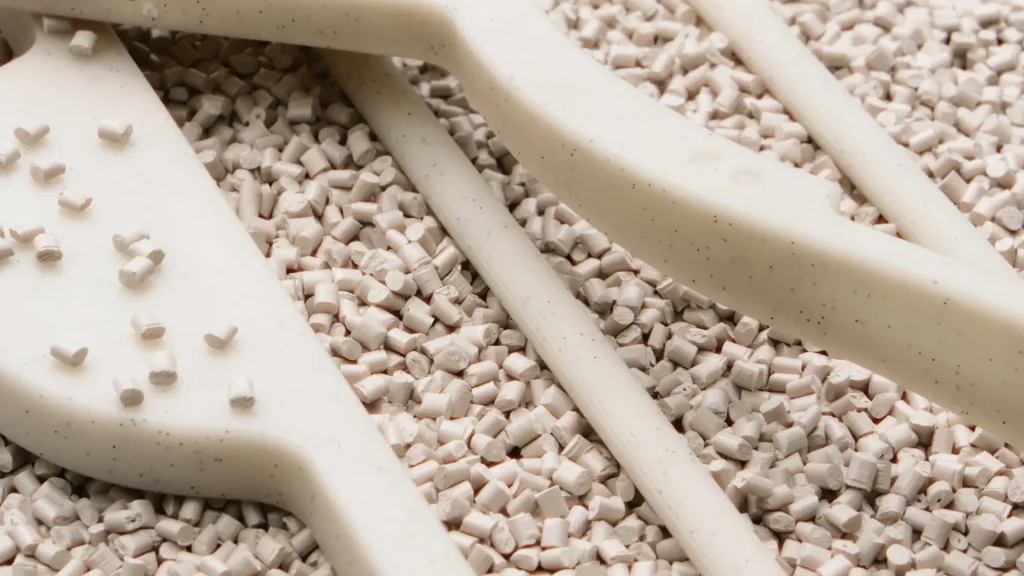

High-quality recycled plastic for industry
At Erum Group, we manufacture and supply recycled plastic for industry, with traceability from waste to final material. We specialize in the collection, transfer, and transformation of post-consumer and industrial plastics to convert them into high-performance raw materials suitable for demanding injection processes. We hold GRS (Global Recycled Standard) and UNE-EN 15343 certifications, which guarantee verified recycled content and full traceability of our supply chain. If your company needs a recycled plastic supplier with real industrial capacity and verifiable documentation, you are in the right place.
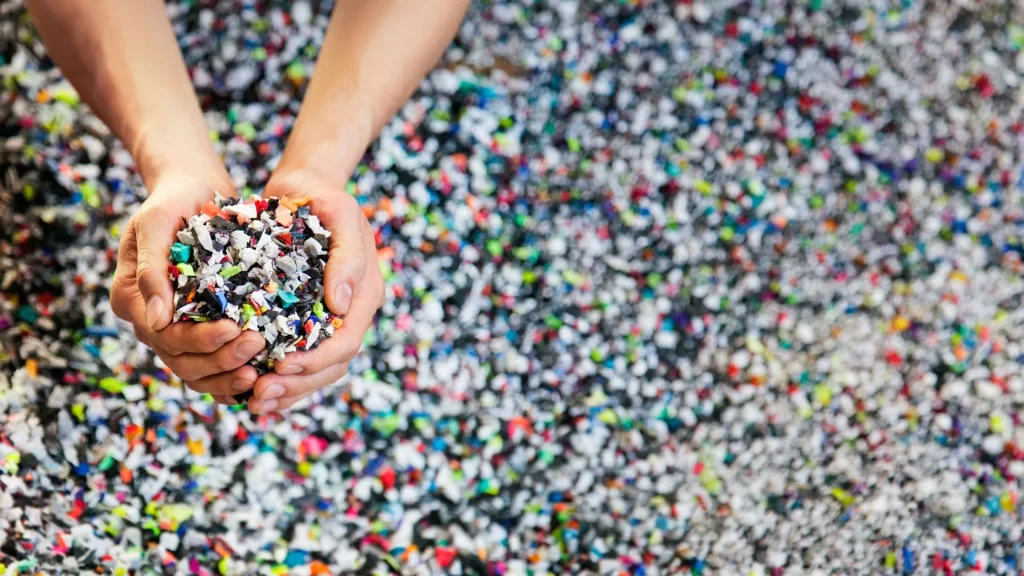
What is recycled plastic and why does it matter in industry?
Recycled plastic is material that has been recovered from post-consumer or post-industrial waste, processed, and transformed back into usable raw material for manufacturing processes. It is distinguished from virgin plastic in that its production consumes less energy and generates significantly fewer CO₂ emissions, without compromising the mechanical properties of the resulting material when the recycling process is rigorous.
In the current regulatory context, the demand for recycled plastic is growing rapidly. The European Packaging and Packaging Waste Regulation (PPWR) establishes minimum mandatory recycled content percentages for 2030. The CSRD requires companies to report the recycled content of their materials with verifiable data. Furthermore, major automotive, retail, and packaging manufacturers have established public commitments to incorporate recycled material into their supply chains. The question is no longer whether to use recycled plastic, but where to find a supplier that guarantees quality, traceability, and continuous supply.
Types of recycled plastic we supply
Recycled polypropylene
rPP is the most in-demand recycled polymer in the retail, home, and packaging sectors. It is primarily obtained from packaging waste and consumer products. We process post-consumer and industrial rPP with rigorous control of MFI (melt flow index), density, and mechanical properties, ensuring batch-to-batch stability for direct integration into injection lines. Typical applications: hangers, buckets, home organizers, packaging components.
Recycled polystyrene
Recycled rPS is mainly intended for technical and household applications. It is recovered from packaging waste, food containers, and industrial components. We control the homogeneity of the material to ensure repeatable results in high-precision molds. Typical applications: kitchenware, technical components, packaging trays.
Recycled ABS
rABS is the reference material for technical components requiring higher mechanical and thermal resistance. We process it from electronic equipment waste, automotive parts, and industrial components. Typical applications: housings and components for automotive, electronics, and industrial equipment.
rHDPE / rLDPE
Recycled polyethylene
rPE, in both its HDPE and LDPE variants, is used in packaging, low-density parts, and various industrial applications. It is primarily recovered from cleaning product containers, lubricants, and industrial products. Typical applications: tanks, drums, pipes, and technical packaging.
Recycled plastic manufacturing process: from waste to pellets
The quality of recycled plastic does not only depend on the starting material: it depends on the rigor of each stage of the process. At Erum Group, through our subsidiary Acteco, we apply a 7-stage recycling process with quality control at every point:
- Collection. We organize the logistics for collecting plastic waste at the client’s facilities or at our own collection points, adapted to the frequency and volume of each flow.
- Sorting. We separate the material by polymer type (PP, PS, ABS, PE, etc.) and by color when relevant to the final application. Precise sorting at the source determines the purity of the resulting material.
- Washing. We remove organic contaminants, adhesives, labels, and other residues through an industrial washing process. This stage is critical for materials of post-consumer origin.
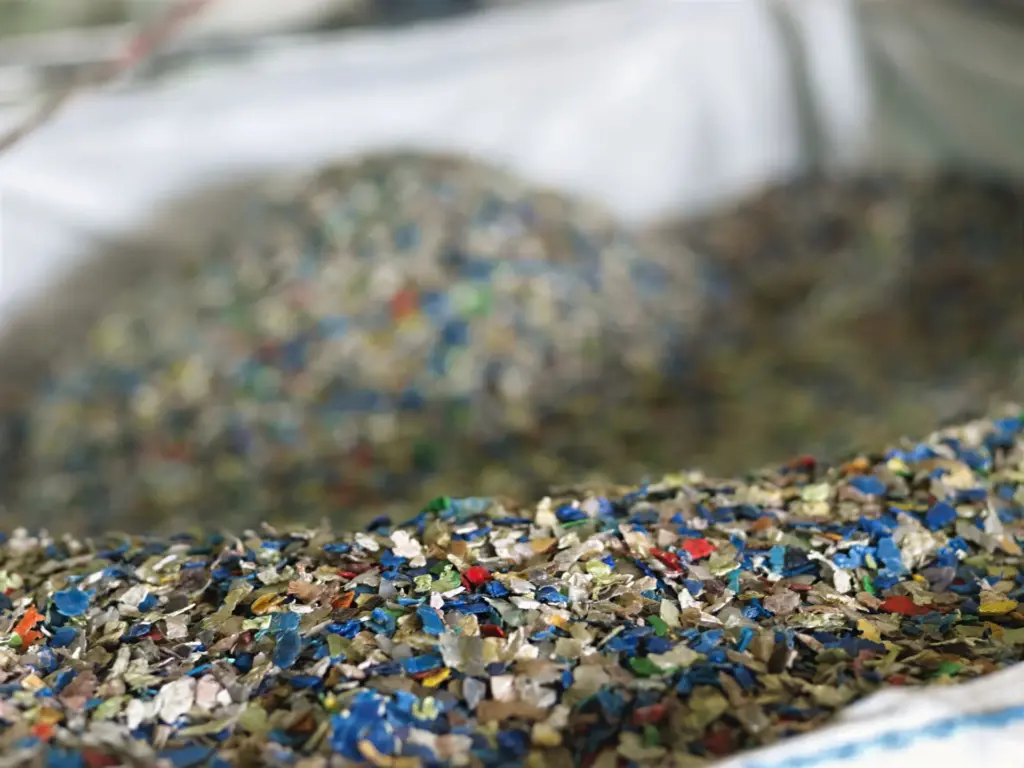
- Shredding. We reduce the washed material into fragments using industrial mills. The shred size is adjusted based on the polymer and the subsequent process.
- Extrusion. The shredded material is melted and homogenized in industrial extruders. At this stage, specific additives can be added to improve the material’s properties according to the application.
- Granulation. The extruded material is cut into pellets of uniform size, ready for direct use in injection, extrusion, or blow molding processes.
- Quality control. Each batch of pellets undergoes exhaustive control of technical parameters to guarantee its performance and stability during processing. Aspects such as melt flow index, density, mechanical properties (tensile strength, elongation at break, and impact), as well as moisture content, color, and the presence of contaminants are analyzed. Only batches that meet the defined standards are certified for supply, ensuring consistent and reliable quality in industrial applications.
In addition to recycled pellets (the most common format for injection and extrusion processes), we supply recycled plastic in other formats according to the client’s needs:
Pellets
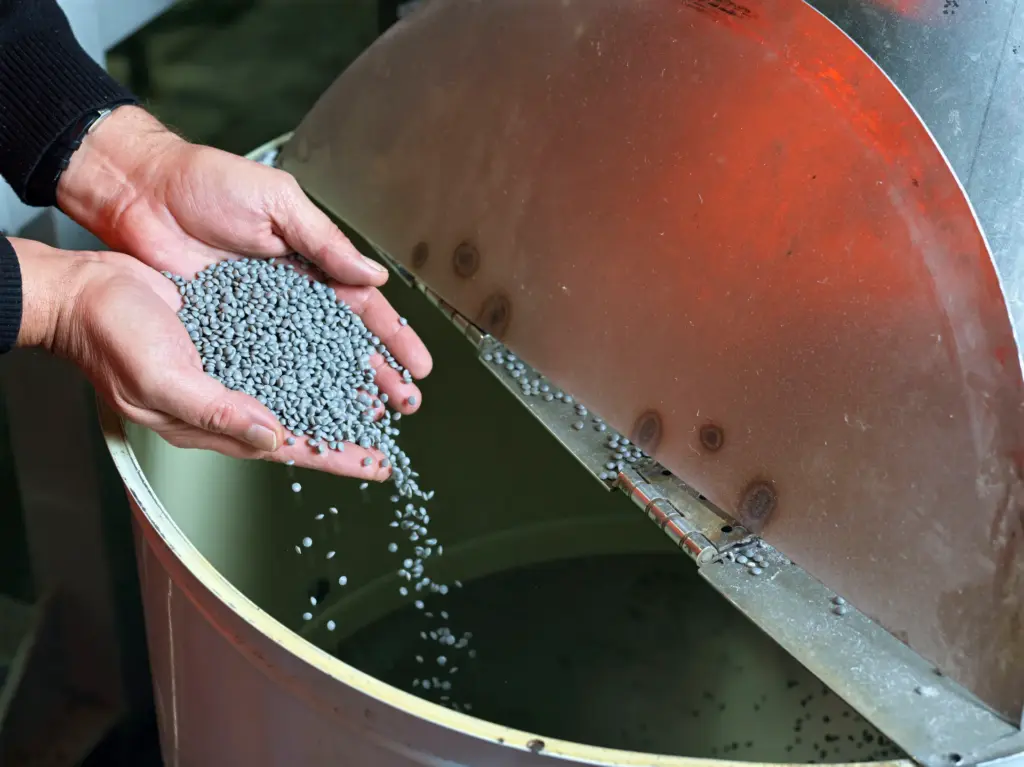
Standard format for injection, extrusion, and blow molding. Uniform size, maximum homogeneity per batch.
Shredded plastic (flake)
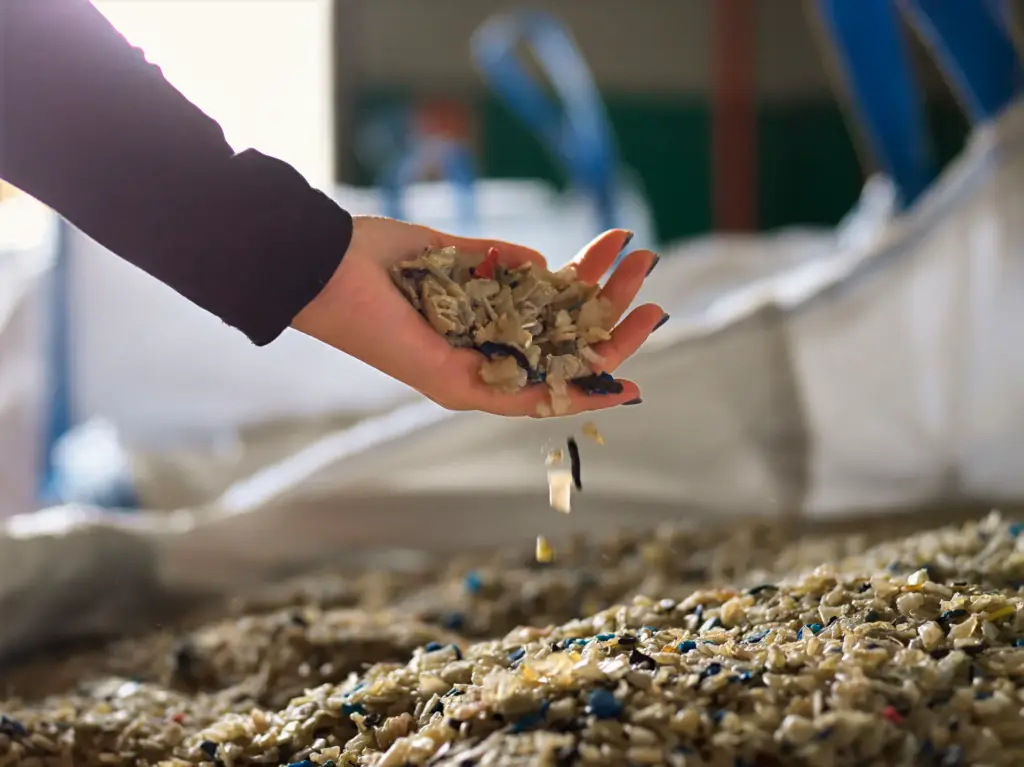
Shredded material without extrusion, for specific processes that do not require granulation. Lower transformation cost.
Industrial applications of recycled plastic by sector
The recycled plastic we produce at Erum Group is used in real and demanding industrial applications, not just in low technical demand applications:
- Retail and fashion: Recycled hangers in various materials such as rPP, rPS, or rABS. The same hangers that have been in the stores of the world’s most demanding brands for over 80 years.
- Home and consumer goods: Buckets, brushes, organizers, and kitchenware manufactured with rPP and rPS, with the same mechanical properties as the virgin plastic equivalent.
- Packaging: Technical and industrial containers with certified rPP or rHDPE content, suitable for non-food applications and, with appropriate decontamination processes, for certain food uses.
- Automotive: Interior components and technical parts manufactured with rPP and rABS through Novaerum, with recycled content traceability suitable for OEM audits.
- General industry: Technical parts, housings, machinery components, and signage elements manufactured with certified post-consumer recycled material.
Erum Group’s recycled plastic is backed by a specific certification scheme for recycled raw materials:
GRS (Global Recycled Standard)
Certifies that our products contain verified recycled materials and that we operate responsibly throughout the supply chain. It is the international reference standard for recycled content.
UNE-EN 15343
European standard confirming that our recycled plastics are identified and controlled throughout the supply chain, with full traceability from the origin of the waste to the final material.
ISO 9001
Certifies the quality and efficiency of our production processes, ensuring consistency batch after batch.
ISO 14001
Environmental management system that guarantees our recycling process is sustainable and complies with current environmental regulations.
REACH
Confirms that our recycled materials are free from hazardous substances regulated by European chemical regulations.
UNE-EN 13430
Certifies that our products are designed to be recyclable at the end of their useful life.
PPWR and CSRD: how Erum Group's recycled plastic helps you comply with European regulations
Packaging and Packaging Waste Regulation
The new European packaging regulation establishes minimum mandatory recycled content percentages for different types of packaging starting in 2030: between 10% and 35% depending on the material and application. Companies marketing packaged products in the EU must adapt their packaging materials to meet these requirements. Erum Group’s recycled pellets, certified under GRS and UNE-EN 15343, are suitable for proving recycled content in packaging to auditors and competent authorities.
Corporate Sustainability Reporting Directive
The CSRD requires large companies and, progressively, medium-sized ones, to report verifiable data on the environmental impact of their supply chain. In the area of materials, this includes the percentage of recycled content of purchased materials (Scope 3, category 1: purchased goods and services). The documentation Erum Group generates for each batch of recycled plastic—certified recycled content, material origin, technical parameters—is directly usable in CSRD reports and supply chain sustainability audits.
Frequently asked questions about recycled plastic
What is the difference between post-consumer recycled plastic (PCR) and post-industrial (PIR)?
Post-consumer recycled plastic (PCR or rPCR) comes from waste generated by the final consumer: cleaning product containers, store hangers, end-of-life appliances. Post-industrial recycled plastic (PIR) comes from scraps and waste from industrial processes that have never reached the consumer. PCR has higher value in terms of sustainability reporting because it closes the full product cycle; PIR is usually more homogeneous and easier to process. At Erum Group, we work with both types depending on the application.
Does recycled plastic have the same properties as virgin plastic?
It depends on the recycling process and the degree of purity of the material. At Erum Group, thanks to rigorous sorting, washing, and batch-by-batch quality control, we produce recycled pellets with mechanical properties equivalent to virgin plastic for most industrial applications. For applications with very demanding technical requirements, we can develop specific compounds.
What certifications credit the recycled content of the material?
Our recycled plastic is certified under GRS (Global Recycled Standard) and UNE-EN 15343, the two reference standards for traceability and verifiable recycled content. We issue technical documentation per batch with the percentage of recycled content, the origin of the material, and quality parameters.
In what formats is recycled plastic available?
We primarily supply in pellet format, which is the most common for injection and extrusion processes.
What is the minimum order?
The usual minimum order is a full truckload, as it is the most efficient option logistically.
However, in the case of standard materials available in stock, it is possible to manage smaller quantities, such as 1 or 2 pallets, always depending on the availability at that time.
Can I audit the recycling process?
Yes. We have certifications audited by third parties (GRS, UNE-EN 15343, ISO 9001, ISO 14001) that credit our process. For clients with specific supply chain audit requirements, we can facilitate plant visits and additional documentation.
Erum Group is the recycled plastic supplier that manufactures the material it uses, certifies it with the most demanding standards on the market, and generates the documentation you need for your CSRD reports, supply chain audits, and PPWR compliance. Over 80 years of closing material cycles on an industrial scale.