

Industrial reverse logistics: collection, sorting and recirculation of materials
At Erum Group, we manage the full reverse logistics cycle for retail, fashion and industry: structured collection of used products, technical sorting, and the destination decision that maximises the value of each item and each material.
Through a combination of in-house resources and a network of specialised partners, we ensure a high level of control throughout the process. Our recycling capacity allows us to integrate part of these flows into our own value chain, facilitating their transformation into certified recycled raw material for new applications.
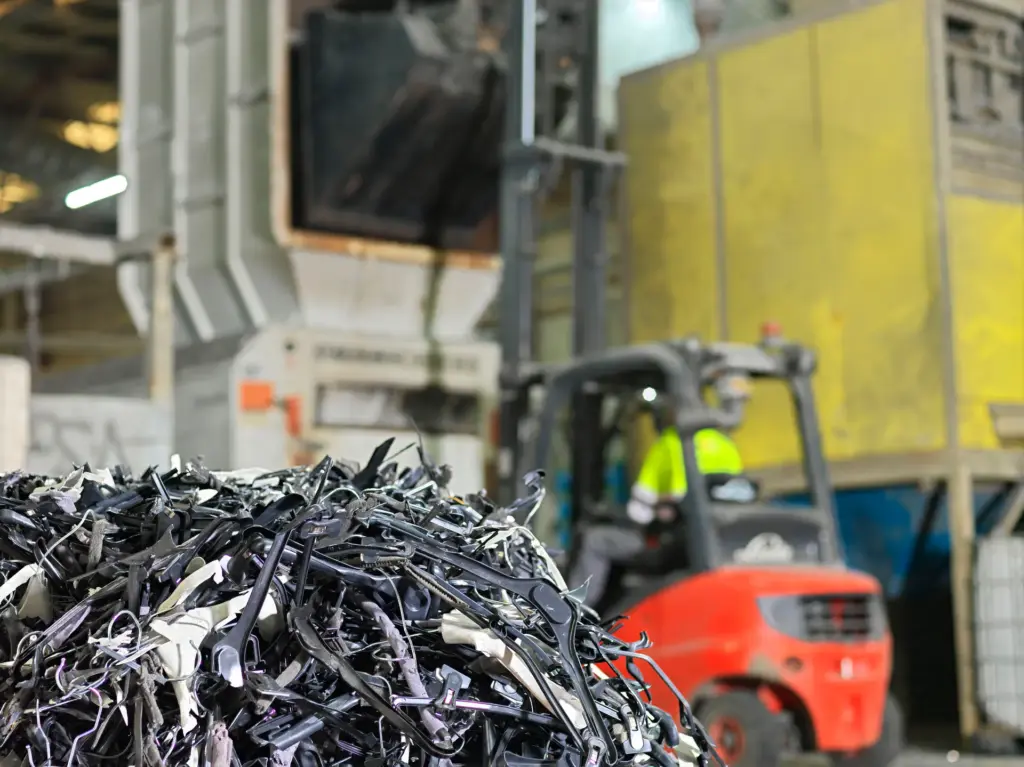
Reverse logistics for retail and fashion: what it is and what problem it solves
Reverse logistics is the reverse process of the conventional supply chain; instead of taking the product from the factory to the point of sale, it manages the return of the product from the point of use to its next destination: reuse, repair, recycling or recovery.
For major retailers and fashion chains, this process has a very specific name and cost: managing hangers returned from stores, packaging returned by customers, and returned garments that cannot be put back into stock. Without a structured system, this flow generates logistics costs, waste and loss of value.
With a well-designed system, that same flow becomes a competitive advantage, reduces the cost of new hangers, improves ESG indicators and generates verifiable data for CSRD reporting.
Who this service is for:
- Major retailers and fashion chains with owned or franchised store networks
- Sustainability Managers with recycled-content or carbon footprint commitments
- Supply Chain Managers who manage return flows of hangers, packaging or returned products
- Business Development Managers looking for partners for applied circular economy projects
- Industrial manufacturers with process waste that needs to be reincorporated into the production cycle
Reverse logistics for hangers in retail and fashion
Hangers represent one of the most intensive reverse logistics flows in the retail sector. Every year, millions of units circulate between factories, distribution centres, stores and collection points. Proper management is key to maintaining an efficient supply cost and reducing operational and environmental impact.
At Erum Group, we design and operate return systems tailored to each client’s reality and supply chain configuration. We do not work with a single standard model; instead, we define the most efficient solution based on logistics flows, volumes and collection points.
This includes return-to-source circuits, redistribution within existing logistics networks, or hybrid models that combine different destinations depending on the condition and use of each hanger.
In all cases, the process follows a clear structure: organised collection at the return point, technical sorting at our hubs, destination decision (direct reuse, refurbishment or recycling), and reintroduction into circulation within the chain.
The Erum Group difference:
In the sector, reverse logistics often ends with reuse or outsourcing the waste. At Erum Group, we take a more comprehensive approach, where the material is recycled and revalorised as recycled plastic pellets, closing the loop and facilitating its reintroduction into new production processes.
What the hanger reverse logistics service includes:
- Regular collection at distribution centres.
- Technical sorting: hangers suitable for direct reuse / repair / recycling
- Reuse: reintroduction into the distribution cycle with technical guarantees
- Repair: work on hangers with minor damage to extend their service life
- Recycling: transformation into certified recycled pellets (GRS, UNE-EN 15343)
- Traceability: amount of material collected, tonnes recycled…
Industrial reverse logistics: packaging, materials and end-of-life products
Beyond hangers, reverse logistics at Erum Group focuses on managing return flows generated in retail and distribution environments, associated both with the product and with its logistics operations:
- Main product: used hangers from stores, logistics centres or collection points
- Associated materials from the logistics and retail environment: cardboard (boxes and packaging), plastic film (wrapping and shrink wrap), textile elements linked to the garment, and pallets
In all these cases, Erum Group’s process is based on a structured operation that includes organised collection, technical sorting of materials, and defining the most suitable destination based on operational and recovery criteria.
How Erum Group reverse logistics works: from point of use to the new cycle
The process begins at the point where the product ends its function and its next life begins.
- Collection. We collect in a structured and regular way at the client’s distribution centres. We optimise routes to reduce the logistics impact of returns.
- Technical sorting. At our sorting hubs, each item or material is assessed under rigorous technical criteria: condition, quality, reuse potential and material type. The geographical proximity of the hubs to the return point reduces transport and increases direct reuse rates.
- Destination decision. For each flow, we define the optimal destination according to the order of the recovery hierarchy: – Direct reuse: the product returns to the cycle without intervention
– Repair: minimal intervention to extend service life
– Recycling: transformation into certified secondary raw material
– Energy recovery: last resort when recycling is not viable - New value creation. The processed material is reincorporated into the cycle: as a reused hanger in the client’s network, as certified recycled pellets in our injection chain, or as secondary raw material for third parties.
- Traceability and reporting. We document each stage of the process: volumes by type, destination, recovery percentage and data for ESG reporting.
Global hub network: local sorting to maximise reuse
The key to Erum Group’s model is not just collection; it is sorting close to the return point.
When sorting is done locally, the direct reuse rate soars; hangers suitable for reuse are redistributed locally without passing through a centralised centre. The result is a reuse rate close to 90%, compared to the usual 42% of centralised models.
Erum Group operates a network of sorting hubs in more than 10 countries, with an active presence in Europe, North Africa, the Middle East and Asia, covering the sourcing and distribution markets of major global retailers.
Reverse logistics and ESG reporting: verifiable data and sustainability commitments
A Sustainability Manager at a major retailer needs more than a collection service. They need data.
Erum Group reverse logistics generates verifiable documentation at every step of the process: volumes collected by type, reuse percentage, recycling percentage, CO₂ avoided compared to new production, and certified recycled content (GRS, UNE-EN 15343).
What data the service generates for the client’s reporting:
- Tonnes of material collected by period, category and point of origin
- Direct reuse rate: % of units that return to the cycle without transformation
- Recycling rate: % of material transformed into certified secondary raw material
- GRS-certified recycled content: data usable in product reporting
- Estimated CO₂ avoided compared to production of equivalent virgin material
- Documentation directly usable in CSRD reports (Scope 3, purchases category)
Why choose Erum Group as your reverse logistics partner
Most hanger return systems manage collection and reuse. The cycle ends when the hanger can no longer be reused.
At Erum Group, that is precisely when the next part of the cycle begins.
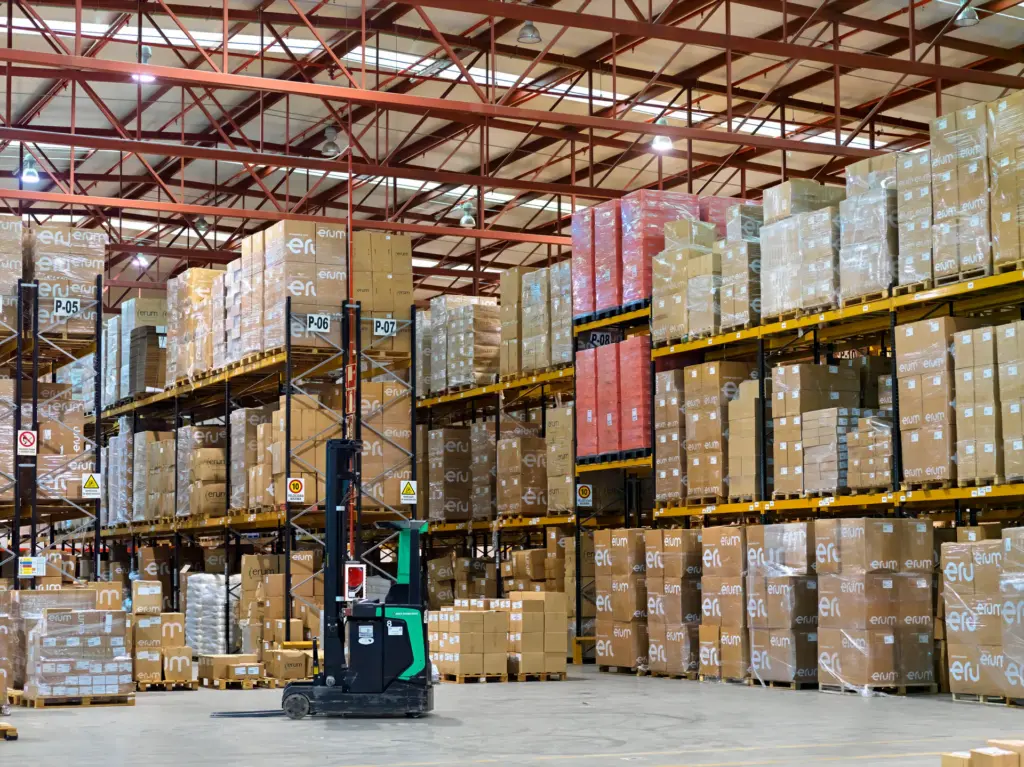
What makes Erum Group’s model different:
- Integrated recycling chain: the hanger that can no longer be reused is recycled, without loss of traceability
- GRS-certified recycled content: the material that comes out of our recycling process is GRS-certified and can be credited in the client’s product reporting
- End-to-end material traceability: from the hanger collected in-store to the pellets that go into the injection press
- In-house manufacturing with recycled material: the full cycle (collection, recycling, new hanger) with a single partner
- ESG documentation: verifiable traceability reports by period, with certified recycled content and estimated CO₂ avoided
- Presence in more than 96 countries: coverage of the sourcing and sales markets of major global retailers
Frequently asked questions about reverse logistics
What is reverse logistics?
It is the set of processes that manage the flow of products and materials from the point of use to their next destination: reuse, repair, recycling or recovery. In the retail and fashion sector, it includes the collection of hangers, packaging and returned products. In industrial environments, it covers process waste, out-of-spec product and end-of-life material.
What is an RTS system in hanger reverse logistics?
RTS (Return to Source) is the model in which the hanger returns to the origin (garment manufacturer or the client’s distribution centre) to be reused in the next loading cycle. It is the most efficient model in chains with regular return flows and high volumes, common in fashion brands sourcing in Asia or North Africa.
What is an RTU system in hanger reverse logistics?
RTU (Return to User) is the model in which the hanger returns to the retailer or distributor to be reused in-store or in the next distribution process. It is the usual model in chains with a dense owned-store network in the domestic market.
What happens to hangers that can no longer be reused?
At Erum Group, hangers that do not meet the sorting criteria for reuse or repair are recycled in our own chain. The result is recycled plastic pellets certified under GRS and UNE-EN 15343, which can be turned into a new hanger or another injection-moulded plastic part.
Do you provide documentation for ESG reporting?
Every month we provide our clients with detailed information on the amount of products recirculated and recycled, the estimated number of use cycles, as well as the reasons and defect types that determine shipment to recycling, facilitating both traceability and continuous product improvement.
In which countries do you operate?
Erum Group operates in more than 96 countries with an active presence in Europe, the Americas, North Africa, the Middle East and Asia, covering the main sourcing and distribution markets of major global retailers.