

Digital Product Passport: Guide to Its Implementation Before the Deadline
Business sustainability is moving towards a new stage. It is no longer enough to claim that a product is more sustainable. It will increasingly be necessary to demonstrate this with data, traceability, and verifiable information.
In this context, the Digital Product Passport (DPP) emerges, driven by the European Union to gather key information on the origin, composition, reparability, durability, environmental impact, and end-of-life of specific products.
The objective is clear: to improve transparency, facilitate the circular economy, and help companies, recyclers, authorities, and consumers make better decisions.
For many companies, especially in sectors such as textile products, footwear, electronics, or batteries, the DPP will represent a significant change in how data, materials, suppliers, traceability, and regulatory compliance are managed.
What is the Digital Product Passport?
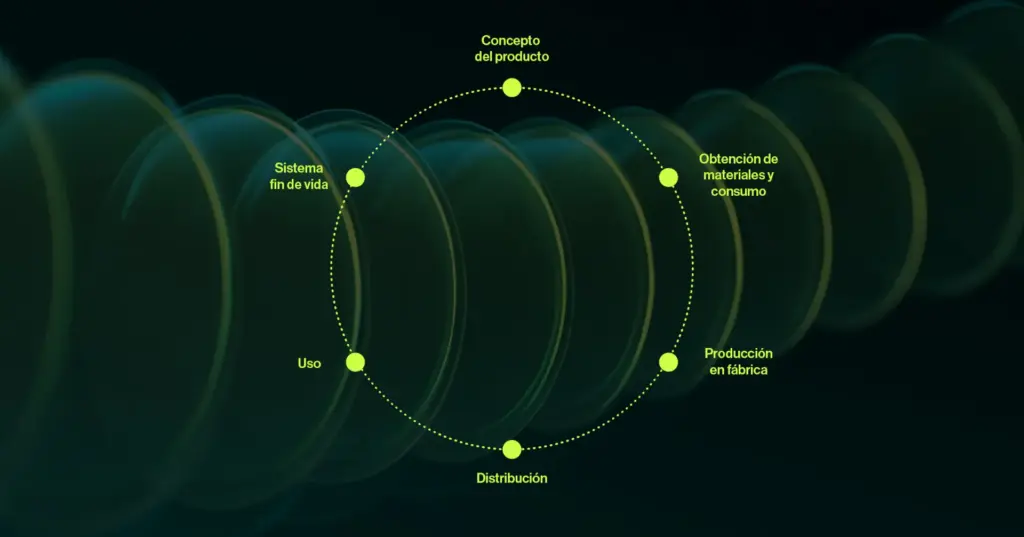
The Digital Product Passport is a digital system that provides access to relevant information about a product throughout its lifecycle.
The European Commission defines it as a digital container of information on products, components, and materials, aimed at supporting sustainability, promoting circularity, and facilitating legal compliance.
In practice, the DPP will function as a digital data sheet connected to the product via an access medium, such as a QR code, a label, or a digital identifier. By scanning it, authorized stakeholders will be able to consult information on materials, manufacturing, maintenance, repair, recycling, or end-of-life management.
Its value lies not only in displaying data but in organizing the necessary information so that a product can be better designed, used, repaired, recovered, and recycled.
The Legal Framework: ESPR Regulation (EU 2024/1781)
The Digital Product Passport is framed within the Ecodesign for Sustainable Products Regulation (ESPR), officially Regulation (EU) 2024/1781.
This regulation establishes a framework for defining ecodesign requirements applicable to sustainable products placed on the European Union market. Among these requirements, the ESPR incorporates the Digital Product Passport as a key tool to improve the information available on products and their environmental performance.
The ESPR does not establish a single, identical obligation for all products from day one. Its application will develop progressively through delegated acts for specific product groups. These acts will define what specific requirements each category must meet, what information the digital passport must include, and what deadlines will apply.
Why is the European Union Promoting the Digital Passport?
The European Union is promoting the DPP because the transition towards more sustainable products requires reliable, accessible, and comparable information.
The digital passport seeks to reinforce several objectives:
- Increase transparency on products and materials.
- Facilitate repair, reuse, and recycling.
- Improve traceability within the value chain.
- Support regulatory compliance.
- Reduce the environmental impact of products placed on the European market.
- Help consumers and businesses make more informed decisions.
The European Commission has indicated that the DPP is part of the transition towards a more circular economy, by providing digital information related to the sustainability, circularity, and legal compliance of products.
How Does the ESPR Affect Fashion Brands?
For fashion brands, the ESPR represents a significant change in how products are designed, produced, documented, and managed. The textile and clothing sector has been identified as one of the priority areas for the deployment of the Digital Product Passport, due to its environmental impact, the volume of products traded, and its potential for improvement in circularity.
This means that companies linked to fashion must prepare to collect and structure information on materials, composition, durability, reparability, recyclability, environmental impact, and end-of-life management. They must also review how they interact with suppliers, manufacturers, recyclers, and other stakeholders in the value chain to ensure that the necessary data is available, reliable, and can be updated correctly.
The ESPR does not only affect the final product. It also pushes brands to rethink previous decisions such as ecodesign, material selection, traceability, ease of repair, or the possibility of recovering and recycling products when their use ends. In this sense, the digital passport can become a key tool for advancing towards more transparent, circular fashion models prepared for new regulatory demands.
Implementation Timeline and Key Deadlines
The implementation of the Digital Product Passport will be progressive. The ESPR Regulation is already in force, but specific obligations will depend on the delegated acts approved for each product group.
The European Commission has identified textile and clothing products as one of the priority groups within the ESPR 2025-2030 work plan. For textiles, the adoption of the delegated act is planned for the fourth quarter of 2027.
This does not mean that all textile companies must have the full DPP implemented today, but it does mark a key preparation date. Companies working with textile products, footwear, accessories, or fashion-related materials must begin to organize data, review suppliers, map materials, and prepare their internal systems in advance.
Furthermore, the DPP will be deployed in other sectors such as batteries, electronics, tires, aluminum, construction, and other priority groups according to the European roadmap.
What Data and Information Must the Digital Passport Include?
The specific information will depend on each product group and the delegated acts developed by the European Commission. However, the DPP points towards a common structure: gathering relevant data to assess the sustainability, circularity, and compliance of each product.
To understand it better, we can imagine the case of a textile garment marketed in the European Union. Its digital passport could include information on composition, materials, country of manufacture, care instructions, reparability, durability, environmental impact, recyclability, and end-of-life management.
Traceability and Material Composition
One of the first blocks of information will be product traceability.
In the case of a garment, the DPP could indicate what fibers it contains, what percentage corresponds to each material, if it incorporates recycled materials, which suppliers have participated in its production, or what processes have been involved in its manufacture.
This information is especially important in textile products, where the mixture of fibers, finishes, dyes, accessories, or components can condition their subsequent recycling.
Knowing the actual composition of a product allows for better decisions from design, purchasing, production, and end-of-life management.
Indicators of Reparability, Durability, and Maintenance
The Digital Product Passport may also include information related to product lifespan.
For a textile garment, this could translate into care instructions, maintenance recommendations, information on resistance, possibility of repair, or availability of parts and components.
Durability is one of the major pillars of sustainability. A product that lasts longer, is better cared for, or can be repaired reduces the need for replacement and retains its value for longer.
Therefore, the DPP should not be understood only as a traceability tool. It can also help extend the lifespan of products.
Information on Recycling and End-of-Life Management
Another key block will be information on recycling, recovery, and end-of-life management.
For a garment, the DPP could indicate whether the materials are recyclable, which components should be separated, what instructions recyclers should follow, or what limitations exist for its treatment.
This information can be very useful for operators working with sorting, repair, recycling, or material valorization.
It also connects directly with textile waste, one of fashion’s major environmental challenges. When information on composition and end-of-life is available, it becomes easier to prevent products from ending up in low-value circuits.
Carbon Footprint and Environmental Impact
The digital passport may also incorporate data related to carbon footprint, resource consumption, energy efficiency, water use, or other environmental impact indicators.
The depth of this information will depend on the product category and the technical requirements defined by applicable regulations.
For companies, this block will require progress in measurement, data traceability, and collaboration with suppliers. For consumers, it can provide more transparency. For recyclers and managers, it can facilitate technical decisions on sorting, treatment, or recovery.
Priority Application Sectors
The Digital Product Passport will be implemented gradually by sector. Priority will focus on categories with high environmental impact, circularity potential, or strategic relevance for the European market.
Textile and Footwear Sector: The First Major Date in 2027
The textile and clothing sector is one of the priority areas for DPP development.
The European Commission has indicated that textile and apparel products are among the priority groups of the ESPR 2025-2030 work plan and that the delegated act for textiles is planned for the fourth quarter of 2027.
This timeline makes 2027 a key date for brands, manufacturers, suppliers, distributors, and operators in the textile value chain to start preparing.
The reason is clear. Fashion needs more transparency on materials, production, traceability, durability, recycling, and waste management. The DPP can become an important tool for organizing this information and facilitating more circular models.
Electronics, Batteries, and Other Key Sectors in the Roadmap
The DPP will also advance in other sectors such as batteries, electronics, tires, aluminum, construction, and other products included in the European roadmap.
In some cases, such as batteries, the development of the digital passport already has its own sectoral regulation. According to information from the European Commission, digital passports will be mandatory for certain batteries from February 2027.
This shows that the DPP will not be an exclusive tool for textiles. It will be a transversal digital infrastructure to improve product information across multiple industries.
DPP’s Relationship with the Circular Economy and Ecodesign
The Digital Product Passport is directly related to the circular economy and Product Ecodesign.
The circular economy needs information to function better. If a company knows a product’s composition, its materials, its durability, and its recycling options, it can design better recovery, repair, reuse, or recirculation processes.
At the same time, the DPP can reinforce industrial ecodesign, because it forces thinking about the product from its complete lifecycle.
It is not just about manufacturing a product and adding information to it afterwards. It is about designing it from the origin so that this information makes sense and allows for better action at the end of its useful life.
For Erum Group, this logic connects with a clear vision: industrial sustainability needs data, but also systems capable of transforming that data into operational decisions, material recovery, and impact reduction.
Benefits for Companies, Recyclers, and the End Consumer
The Digital Product Passport can provide value to different stakeholders.
For companies, it helps organize information, anticipate regulatory requirements, improve traceability, and strengthen their sustainability positioning.
For recyclers and waste managers, it can facilitate material identification, component separation, and decision-making on recycling or valorization.
For the end consumer, it provides more transparency about the product they buy, its composition, its durability, and the available options when its use ends.
The value of the DPP lies precisely in connecting information, product, and lifecycle.
Successfully Implementing the Digital Product Passport
Implementing the Digital Product Passport is not just about creating a QR code or a digital data sheet. The real challenge lies in having reliable, updated data connected to the product’s reality.
Companies must review what information they have, where it is, who manages it, how it is validated, and how it is shared with other stakeholders in the value chain.
At this point, projects like CIRPASS and CIRPASS-2 are relevant. CIRPASS concluded in 2024 and served as a preparatory initiative to build consensus on the DPP. CIRPASS-2, funded by the European Union, continues this work through real pilots in sectors such as textiles, electronics, tires, and construction.
These projects help ground the DPP in real environments, test solutions, identify technical challenges, and advance towards interoperable systems.
Technological and Data Management Challenges for Companies
The main challenge will be data quality.
A digital passport will only be useful if the information it contains is reliable, structured, and understandable for different users. This will require collaboration between departments, suppliers, manufacturers, technology platforms, managers, recyclers, and authorities.
Key challenges include:
- Integrating design, production, material, and supplier data.
- Maintaining updated information throughout the product lifecycle.
- Ensuring interoperability between systems.
- Defining access levels according to user.
- Protecting sensitive information.
- Connecting traceability with recycling and end-of-life management decisions.
For many companies, the DPP will be an opportunity to professionalize their product data management and move towards more circular models.
The key will be to understand it from the outset as more than just a regulatory obligation.
The Digital Product Passport can become a tool to better design, better inform, and better manage products when they reach the end of their first use.
And that is where information begins to transform into real value for industrial sustainability.