
For a long time, designing a product meant solving a function. Making it work. Making it last. Making it meet a specific need.
Today, that is no longer enough. In an economy shaped by pressure on resources, environmental regulation and the need to develop sustainable products, design also means anticipating what will happen afterwards.
In today’s industry, design also means anticipating a product’s service life. How it will behave during use. How it can be repaired, reused, disassembled, recycled or turned back into a resource.
That is where industrial eco-design begins.
Designing with the full cycle in mind
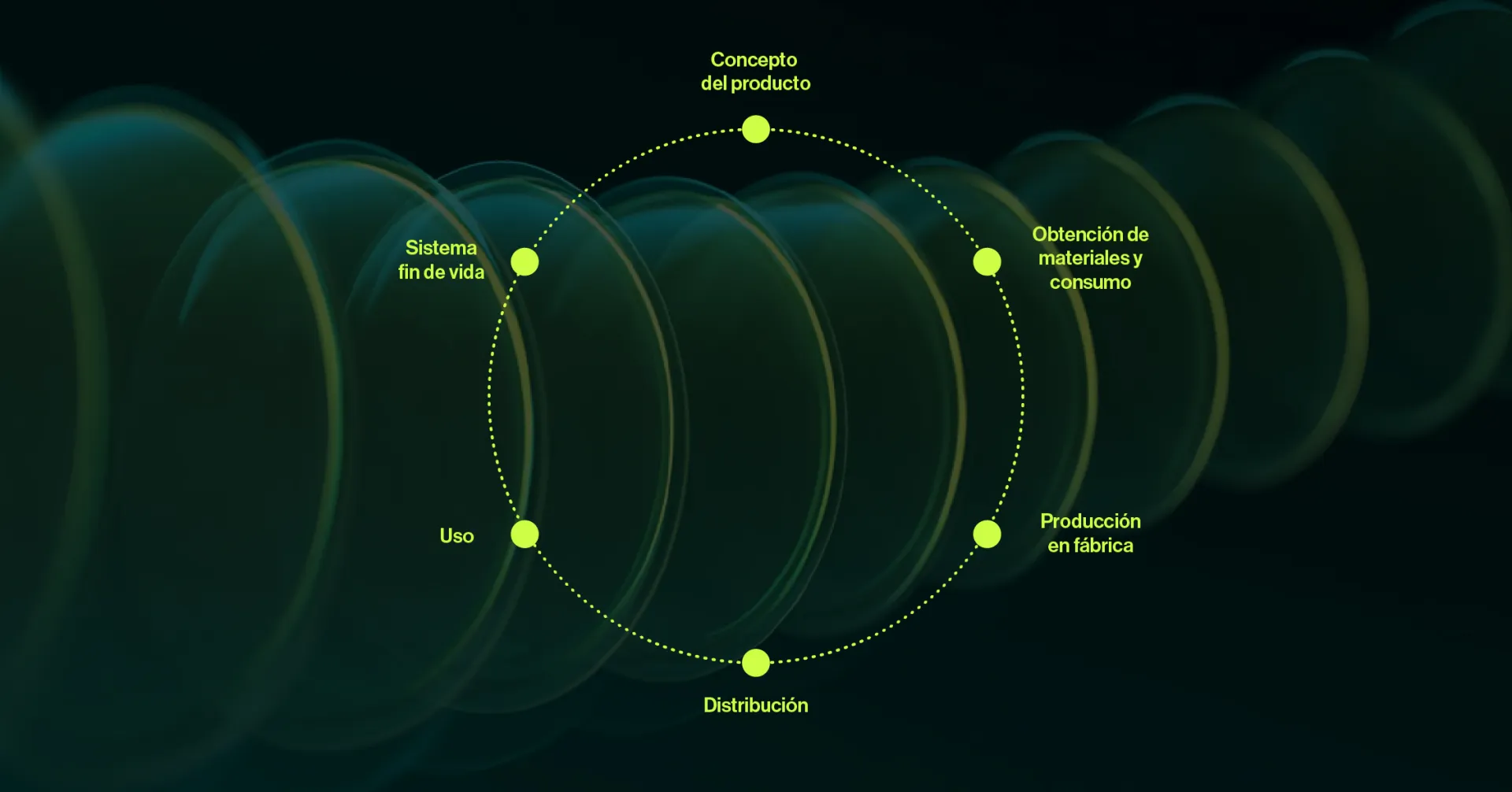
Industrial eco-design involves incorporating environmental, technical and operational criteria from the earliest stages of product development. It means making decisions with the entire life cycle in mind, from material selection and the manufacturing process to use, recovery and end of life.
In this context, industrial eco-design becomes a key tool for moving towards a truly circular economy. It makes it possible to connect sustainable design, production efficiency and environmental responsibility through a single development decision.
The key lies in a simple, but very demanding question: what can we do better before manufacturing?
Because a large part of a product’s impact is decided at the design table. The material chosen, weight, geometry, number of components, durability, repairability or ease of recycling determine how that product will be able to circulate afterwards.
Product eco-design enables exactly that. Designing with intent. With criteria. With a broader vision that does not stop at the final part, but looks at everything that part sets in motion throughout its life.
From designing products to designing systems
Eco-design is not only about making products more sustainable. It is about making products smarter.
A well-designed product can use less material. It can be manufactured more efficiently. It can reduce waste. It can take up less space in transport. It can last longer. It can be disassembled more easily. It can recover value when its first use ends.
That is the point where design stops being an isolated phase and becomes a strategic decision for the entire value chain.
In an industrial context marked by pressure on resources, regulatory requirements, the evolution of the circular economy and the need to improve operational efficiency, circular design stops being an advanced option and becomes a more competitive way to develop products.
This logic affects very different sectors, from technical components to packaging, consumer products, retail solutions or industrial parts. In all cases, the question is the same: how to design better to reduce impact, extend service life and facilitate material recovery.
Designing circularly means thinking about the second life from the very first decision.
Design for recycling and second life
Design for recycling is one of the major levers of industrial eco-design. It involves creating products that can be separated, identified, processed and transformed efficiently when they reach the end of their use.
In products such as packaging, this perspective is especially relevant. Design for recycling makes it possible to reduce complexity, improve material separation and make it easier for waste to be reincorporated as resources in new production processes.
This means reviewing very specific decisions: reducing unnecessary complexity, avoiding combinations of materials that are difficult to separate, facilitating disassembly, incorporating recycled materials when viable, designing more durable parts, and thinking about how they will be recovered and reincorporated into the system.
Because a product designed only to be manufactured quickly can become a problem when it reaches the end of its life. A product designed to circulate can become a new raw material.
The second life starts long before recovery. It starts when someone decides to design a part so it can come back.
Industrial eco-design in real-world environments
In industry, eco-design needs more than intention. It needs technical knowledge, engineering, materials, processes, validation, production capacity and a clear business vision.
Good eco-design must balance sustainability, functionality and economic viability. A product must be more circular, but it must also fulfil its function, withstand use, be viable in production, meet industry standards and deliver value to the customer.
Sustainable design works when it improves the product and also the system around it. It reduces environmental impact, optimises materials, improves processes and makes it easier for waste to become new resources.
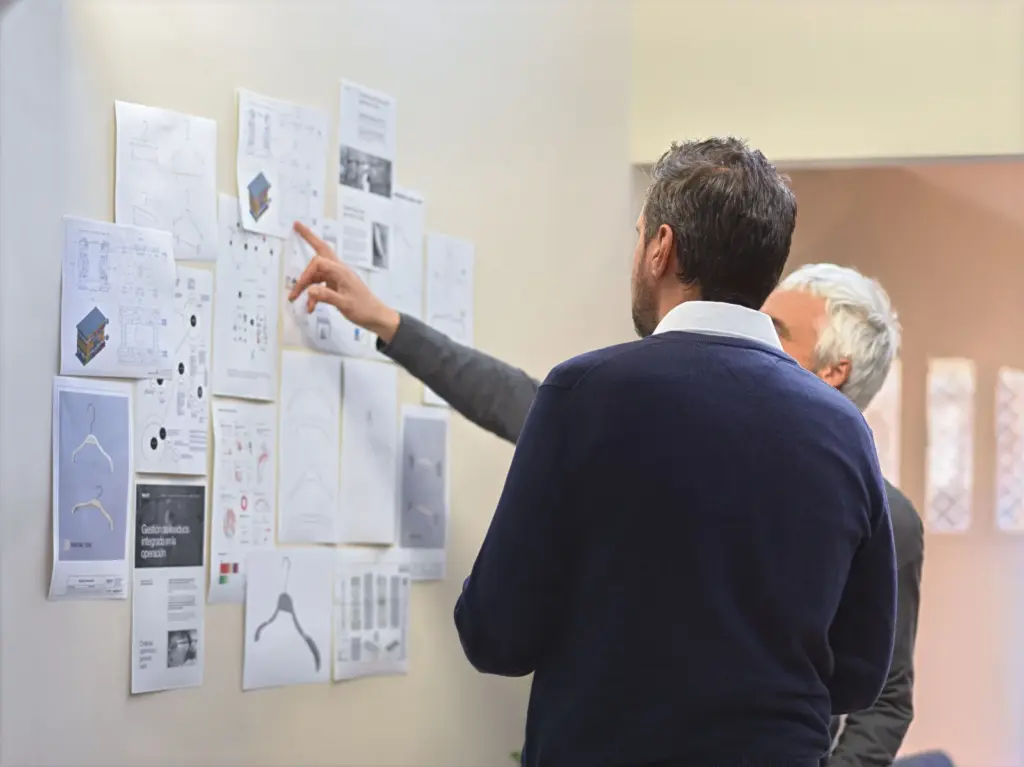
That is why industrial eco-design requires working with a cross-functional approach. Design, engineering, purchasing, production, logistics, quality, sustainability and waste management must be connected from the start.
Only then can decisions be made that work environmentally, but also technically, operationally and economically.
Examples of Industrial Eco-Design
Industrial eco-design is best understood when it is translated into concrete decisions. It is not only about changing one material for another or adding recycled content to a product. It is about reviewing every stage of development so that the final solution can work better, last longer and return to the system more easily.
An eco-designed product starts long before manufacturing. It starts with the initial question, with the choice of material, with the part’s geometry, with the way it is produced, transported, used and recovered. Each stage opens up an opportunity to reduce its environmental impact and generate more value.
These examples can be applied to industrial products, technical components, packaging, household items or retail-related solutions. The goal is always the same: to design sustainable products that meet their current function and, at the same time, are prepared for a second life within a circular economy.
| Process stage | Eco-design decision | Applied example | Impact on the second life |
| Product concept | Define the product’s real function and avoid unnecessary complexity | Design a part with fewer components, while maintaining strength and functionality | Facilitates later reuse, repair or recycling |
| Material selection | Choose recycled, recyclable or mutually compatible materials | Incorporate recycled raw material or reduce blends that are difficult to separate | Improves recovery and reincorporation of the material into the system |
| Technical design | Optimise geometry, weight, thickness and structure | Reduce material without compromising mechanical performance | Reduces resource consumption and maintains durability |
| Manufacturing | Adjust processes to reduce waste, energy use and deviations | Apply sustainable injection moulding, automation or process control | Increases industrial efficiency and reduces operational impact |
| Use and maintenance | Design robust, repairable products or products prepared for multiple cycles | Incorporate replaceable components or longer-life solutions | Extends time in use and reduces the need for replacement |
| Recovery | Facilitate sorting, disassembly and return to the system | Design parts that are identifiable and recoverable after use | Turns end of life into a new value input |
| Recycling or recirculation | Prepare the product to become raw material again | Reincorporate recovered material into new production processes | Closes the loop and reduces dependence on virgin raw material |
| Adaptation to each industry | Apply sustainable design criteria according to the technical, operational and regulatory needs of each sector | Develop packaging, technical parts or everyday products with recyclable materials and less complexity | Facilitates recovery, reduces waste and improves product circularity |
These examples show that circular design is not limited to a single decision. It is a chain of connected choices. A product can be lighter, but also stronger. It can incorporate recycled material, but also be prepared to be recycled again. It can improve manufacturing efficiency and, at the same time, facilitate recovery at end of use.
That is the true value of product eco-design: designing with the first life in mind, but also the second. The immediate use and the return. The function and the system.
When a company incorporates design-for-recycling criteria from the outset, it stops improvising at the end of the cycle. It starts building products that are ready to circulate.
Circularity that starts before recycling
At Erum Group, eco-design is part of a way of understanding industry and driving an applied circular economy. The group combines technical know-how, plastics transformation, engineering, sustainable injection moulding, recycled raw material, waste management and recirculation to develop sustainable products and solutions designed with the full cycle in mind.
This means looking at each product with an underlying question: how can it generate more value for longer?
It can be through lower material consumption. Through more efficient geometry. Through smarter raw material selection. Through more controlled manufacturing. Through a solution designed to be reused. Through a design that makes recycling easier. Through a system that enables the product to be recovered and reincorporated into the loop.
That is the difference between designing for one use and designing for a new life.
Rethinkingthe circular era
Rethinking the circular era also means rethinking how products are designed.
Looking at a part and asking whether it can weigh less. Whether it can last longer. Whether it can be manufactured with less impact. Whether it can be disassembled more easily. Whether it can return to the system. Whether it can stop being waste and become a resource.
Industrial eco-design is not an aesthetic layer or a sustainable label. It is a way of making better decisions from the outset.
Because the industry to come will not be built only with better materials. It will be built with better questions.
And one of them is decisive.
What second life will what we are designing today have?
That question connects design, economy, the environment and industry. And it makes industrial eco-design a decisive tool for developing more circular products, more efficient processes and models capable of generating value beyond the first use.