For decades, many companies have operated under a linear logic: extract, produce, sell, use, and dispose. This model allowed for large-scale growth but today shows its limits due to pressure on resources, waste generation, regulatory demands, and the need to move towards a more efficient industry.
The circular business model proposes a different way of creating value. Instead of designing products for a single use or to end up as waste, it suggests systems capable of keeping materials, components, and products in circulation for longer.
This vision directly connects with the circular economy, a way of understanding production and consumption from a complete life cycle perspective: design, materials, use, repair, reuse, recycling, and recirculation.
The question is no longer just how to sell more. The question is how to generate more value with less resource loss.
What are business models based on the circular economy?
A circular business model integrates the principles of circularity into how products or materials are designed, produced, distributed, recovered, and revalued.
This implies moving from a ‘take-make-dispose’ logic to a logic of continuity. Products are designed to last longer. Materials are selected for recovery. Waste is managed as potential resources. And companies stop focusing solely on the initial sale to consider the entire life cycle.
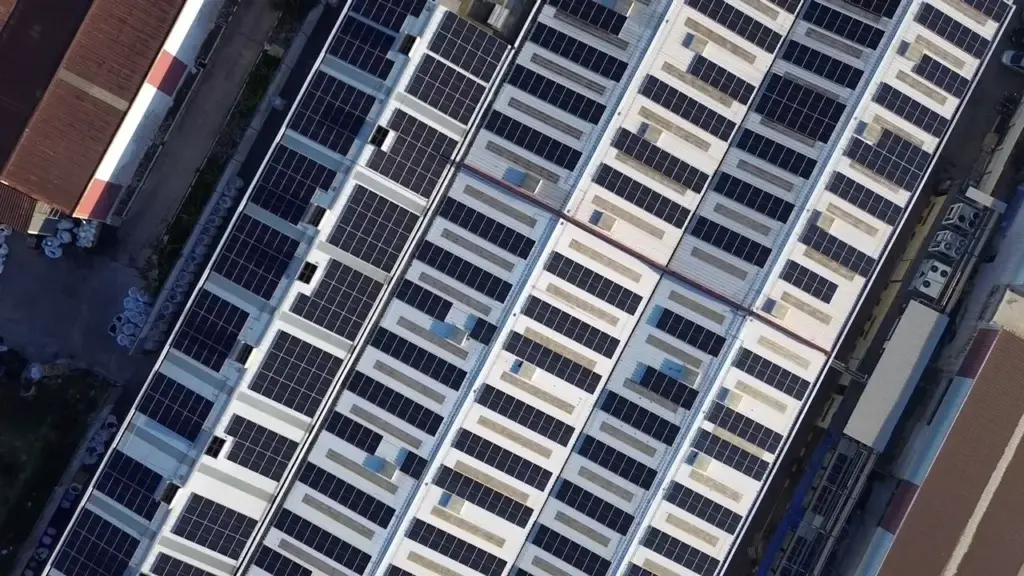
Key characteristics of the circular economy applied to business include ecodesign, repair, reuse, the use of recyclable or biodegradable materials, circular inputs, energy efficiency, the incorporation of renewable energies, and waste reduction.
The change does not depend on a single action. It can come through more durable products, return systems, reconditioning, recycling, second-life sales, material recovery, or circular trade models.
Waste and the Circular Economy
In a linear model, waste represents the end of the road. Something to be removed, managed, or eliminated.
In a circular model, waste changes its meaning.
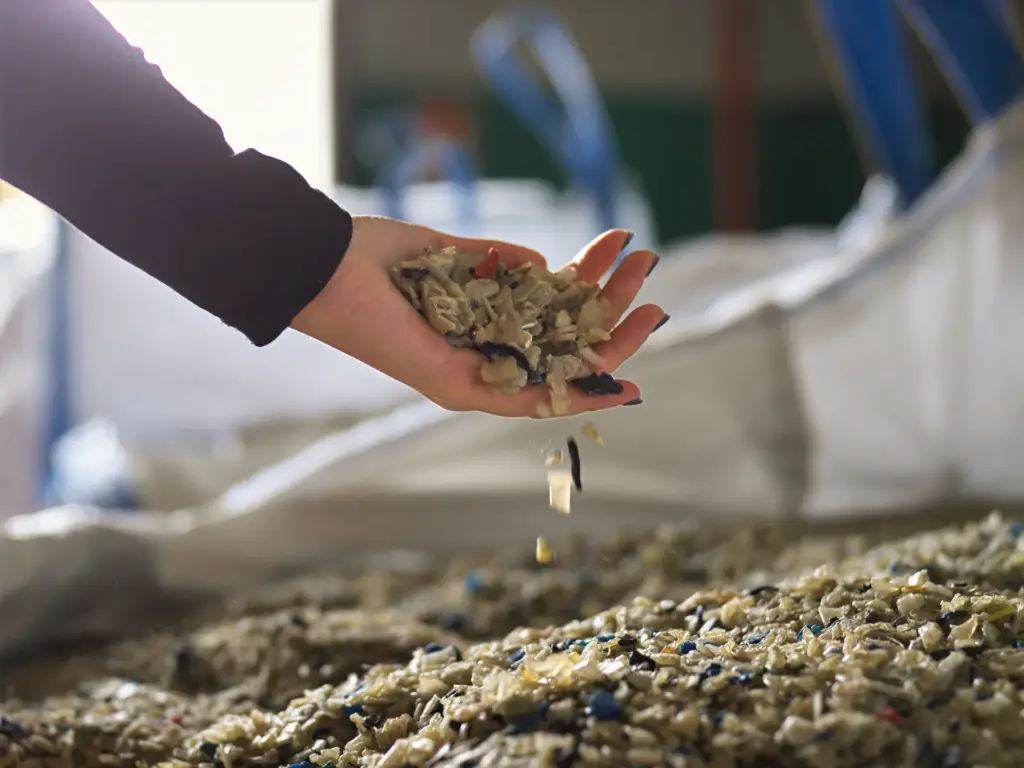
It can become raw material. It can return as a component. It can be transformed into a new product. It can help reduce dependence on virgin resources. And, in some cases, it can be avoided from the design stage if the product is conceived to last, be repaired, or reused.
This shift in perspective is one of the most important concepts of the circular economy. Waste ceases to be merely an environmental or operational cost and becomes part of a value recovery strategy.
To achieve this, companies need systems for collection, sorting, traceability, recycling, reverse logistics, quality control, and industrial capacity to reintroduce materials into new processes.
This approach also allows for progress towards zero waste models, whose objective is to prevent waste generation and maximize resource utilization through reuse, repair, recovery, and recycling. More than an isolated goal, zero waste should be understood as an evolution of production processes towards systems where material losses are minimized and their value is prolonged within the economic cycle.
Strategies for Transitioning to the Circular Business Model
The transition to a circular business model requires developing a circular economy strategy that allows for reviewing design decisions, materials, suppliers, processes, logistics, and customer relationships. The goal is to identify where resources are lost, which materials can be recovered, and how to transform these opportunities into environmental, operational, and economic improvements.
Apply Ecodesign from the Origin
Ecodesign allows products to be conceived from their complete life cycle. It’s not just about reducing impact at the end, but about making better decisions before manufacturing.
This involves better defining materials, optimizing weight and geometry, facilitating disassembly, improving durability, and preparing the product for repair, reuse, or recycling.
Incorporate Recycled or Recyclable Materials
The use of recycled raw materials helps reduce dependence on virgin resources and keep materials within the system for longer.
It is also important to select recyclable materials, compatible with each other or easier to separate, especially in products that will need to be recovered at the end of their useful life.
Design Recovery Systems
A circular company doesn’t just think about how it delivers the product. It also thinks about how it can recover it.
Return systems, reverse logistics, collection, sorting, and reconditioning allow products to re-enter the circuit and not automatically end up as waste.
Prioritize Repair and Reuse
Before recycling, there is often a higher-value option: repair or reuse.
Repair extends useful life. Reuse retains more value than transforming the material from scratch. Both strategies help reduce waste and improve the efficiency of the model.
Measure and Improve Each Cycle
Circularity needs data. Knowing how many products return, in what condition they arrive, which materials are best recovered, or which processes generate the most losses allows for better design, production, and management decisions.
Measuring is not the end of the process. It is the basis for optimizing it.
Benefits for Companies
Adopting a circular business model can provide environmental, operational, and strategic benefits.
Reduced Dependence on Virgin Raw Materials
Recovering materials and reincorporating them into new processes reduces dependence on external resources and allows for better utilization of what already exists within the system.
Waste Reduction
When products are designed to last, be repaired, reused, or recycled, the amount of waste generated decreases, and the ability to manage it with value improves.
Greater Operational Efficiency
Circularity can help organize flows, reduce losses, optimize materials, and improve logistics or production processes.
Better Response to ESG Criteria
Increasingly, customers, investors, and regulators are asking for information on sustainability, traceability, environmental impact, and waste management. A circular model allows for a better response to these demands.
Differentiation and Positioning
Companies that integrate circularity into their model not only reduce impact. They can also build a stronger value proposition, aligned with new market expectations and a more advanced vision of the industry.
3 Examples of a Circular Business Model
Circular models can be applied in very different ways. Some start from recovered materials. Others design products prepared to return to the system. And others convert waste into new raw materials capable of meeting real market needs.
These three examples show how circularity can move from a general idea to concrete product, production, and recovery models.
1. LedOne, a V16 beacon made with recycled plastic
LedOne, the connected V16 beacon developed by Erum Vial, is an example of a circular model applied to an industrial product. Manufactured with post-consumer recycled plastic and designed under ecodesign criteria, it combines road safety, DGT 3.0 connectivity, and circular manufacturing. Erum Group
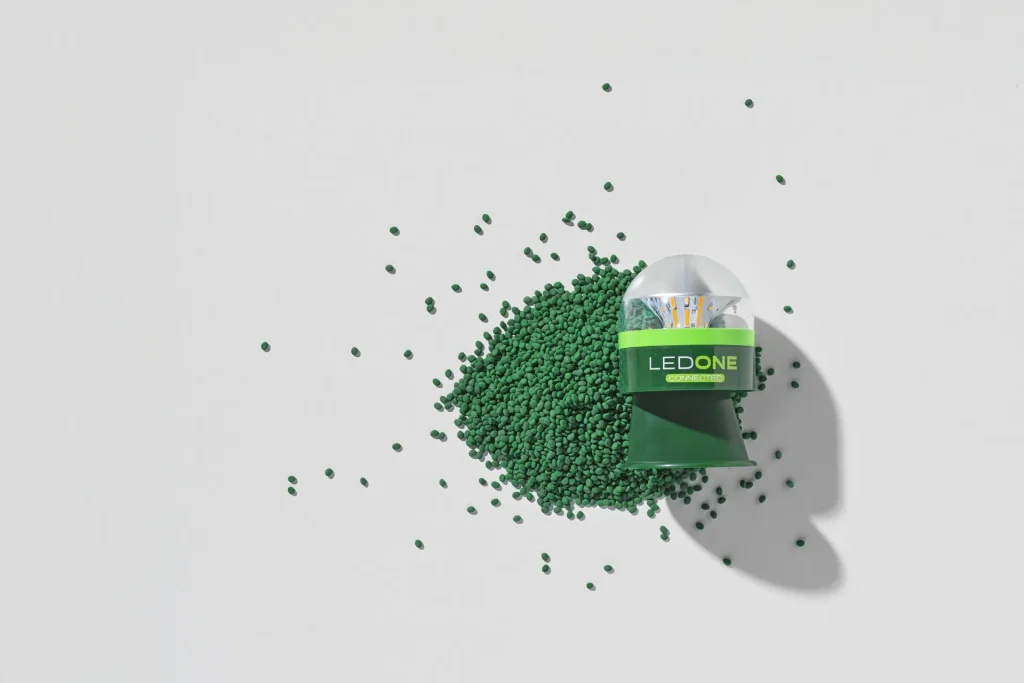
The value of this case lies in demonstrating that recovered materials can be integrated into technical solutions with a real market function. In LedOne, recycled plastic does not act as an accessory argument, but as part of a proposal that unites innovation, safety, industrial manufacturing, and reduced dependence on virgin raw material.
This example shows that a circular business model is not just about recycling waste. It also involves transforming these materials into functional, safe products prepared to meet technical, regulatory, and commercial demands.
2. Patagonia NetPlus, fishing nets converted into new products
Patagonia uses NetPlus, a recycled nylon developed from discarded fishing nets. The brand applies it in products such as caps, visors, and other accessories, transforming waste associated with marine plastic pollution into useful material for new consumer goods.
The model is clear. Waste with a high environmental impact is collected, transformed, and returned to the market as recycled raw material for new applications.
This case is interesting because it connects environmental impact, waste recovery, and product development. The nets cease to be a problem at the end of their use and become part of a new value chain.
3. Adidas Made To Be Remade, products designed to return to the system
Adidas developed the Made To Be Remade concept as a circular end-of-life solution. The company explains that this line began with Futurecraft.Loop, a running shoe launched in 2019, designed as a monomaterial product under circular principles and intended to return to the system after use.
This case is relevant because it brings circularity to product design. The question is not only what material is used, but what will happen to the product after its use.
Made To Be Remade demonstrates that a circular model needs to think about return from the beginning. Design, use, recovery, and new manufacturing are part of the same logic.
Success Story: RTS as Circular Infrastructure for Fashion Retail
The RTS (Return to Source) system by Erum Group is an example of a circular business model applied to fashion retail.
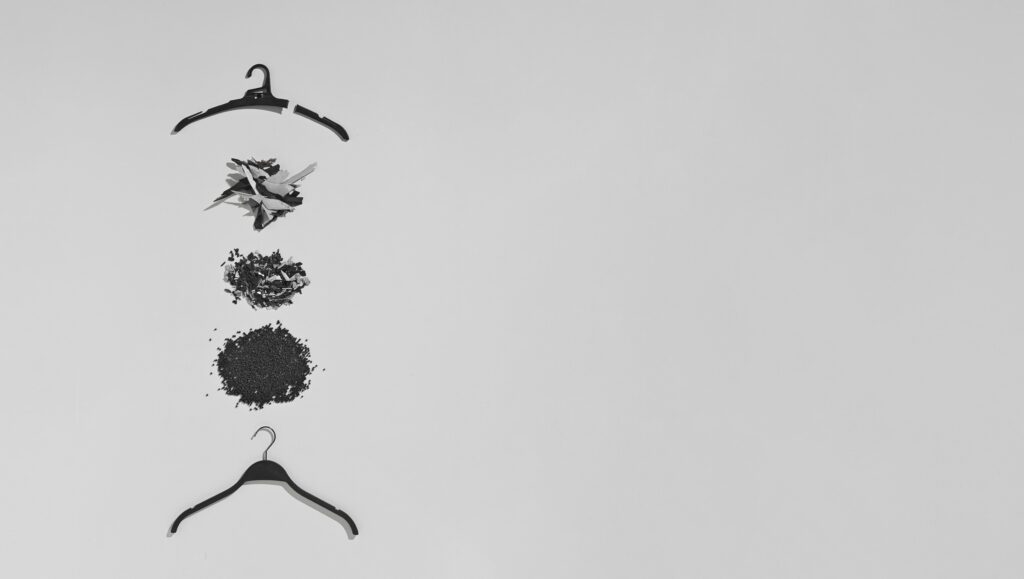
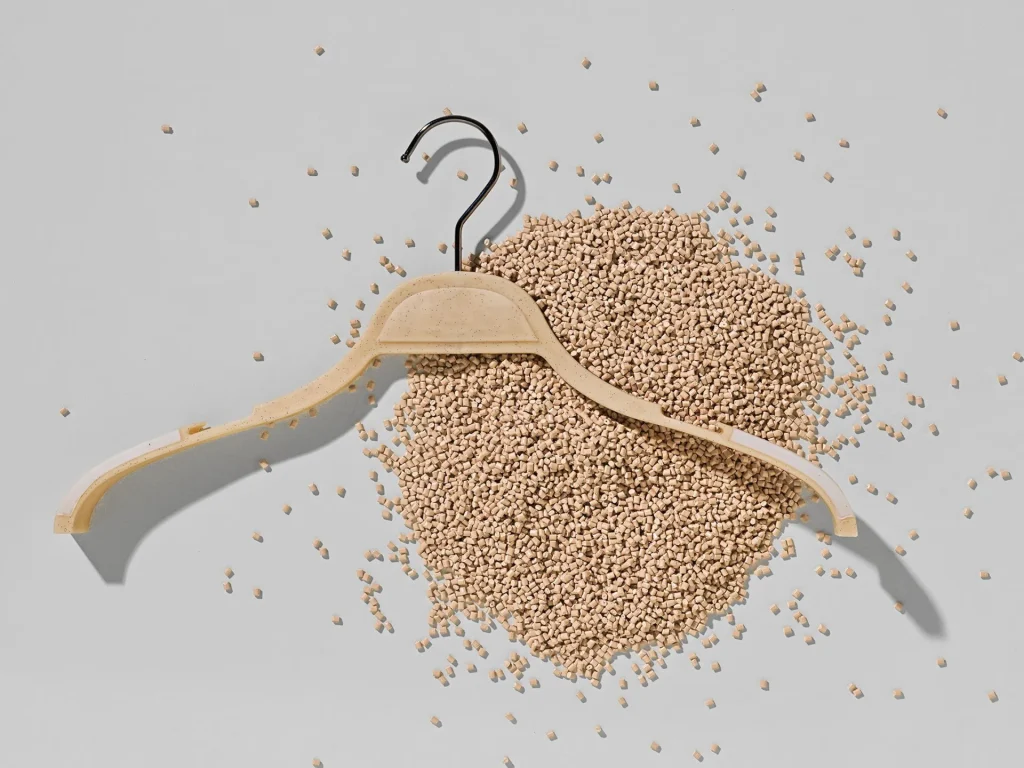
Through RTS, products like hangers can return to the system through reverse logistics, sorting, reuse, repair, recycling, and recirculation processes.
The goal is to preserve the maximum possible value in each cycle, reduce waste generation, and prevent still-usable products from being excluded from the system. If a hanger maintains its conditions of use, it can be reused. If it needs intervention, it can be reconditioned. If it has reached the end of its useful life, it can be recycled to recover its material and reintroduce it into new processes.
This model demonstrates that circularity is not just about manufacturing more sustainable products. It also requires an infrastructure capable of bringing them back, managing them correctly, and deciding the best possible destination for each recovered unit.
At Erum Group, this vision is part of Circular Thinking, a way of rethinking products, materials, and processes so that they continue to generate value beyond their first use.
Frequently Asked Questions
What is the circular model?
The circular model is a way of producing and consuming that seeks to keep products, materials, and resources in use for longer. Unlike the linear model, based on producing, using, and disposing, the circular model incorporates strategies such as repair, reuse, recycling, recirculation, ecodesign, and waste reduction.
What are the 4 principles of the circular economy?
The 4 principles can be summarized as designing out waste, keeping products and materials in use, regenerating natural systems, and rethinking production and consumption systems.
In practice, these principles translate into ecodesign, repair, reuse, recycling, the use of renewable energies, recyclable materials, and business models that make better use of resources.
What are the 5 models of the circular economy?
The 5 most common circular economy models are circular inputs, resource recovery, product life extension, sharing platforms, and product as a service.
Each responds to a different way of generating value: using better materials, recovering waste, extending useful life, sharing assets, or selling usage instead of ownership.