Decarbonization has become one of the major challenges for industry and retail. It’s no longer just about reducing emissions within a factory or an office. Companies need to look at their entire value chain: materials, suppliers, production, transport, logistics, distribution, resource use, and waste management.
In the retail and fashion sector, this perspective is particularly important. Each collection activates a complex network of manufacturing, packaging, transport, in-store display, returns, recovery, and end-of-life for products and supports.
Therefore, discussing retail supply chain decarbonization means going beyond energy. It also means rethinking materials, processes, logistics, circularity, and recovery models capable of reducing CO2 emissions and moving towards a more efficient operation.
Towards Decarbonization of the Energy Matrix
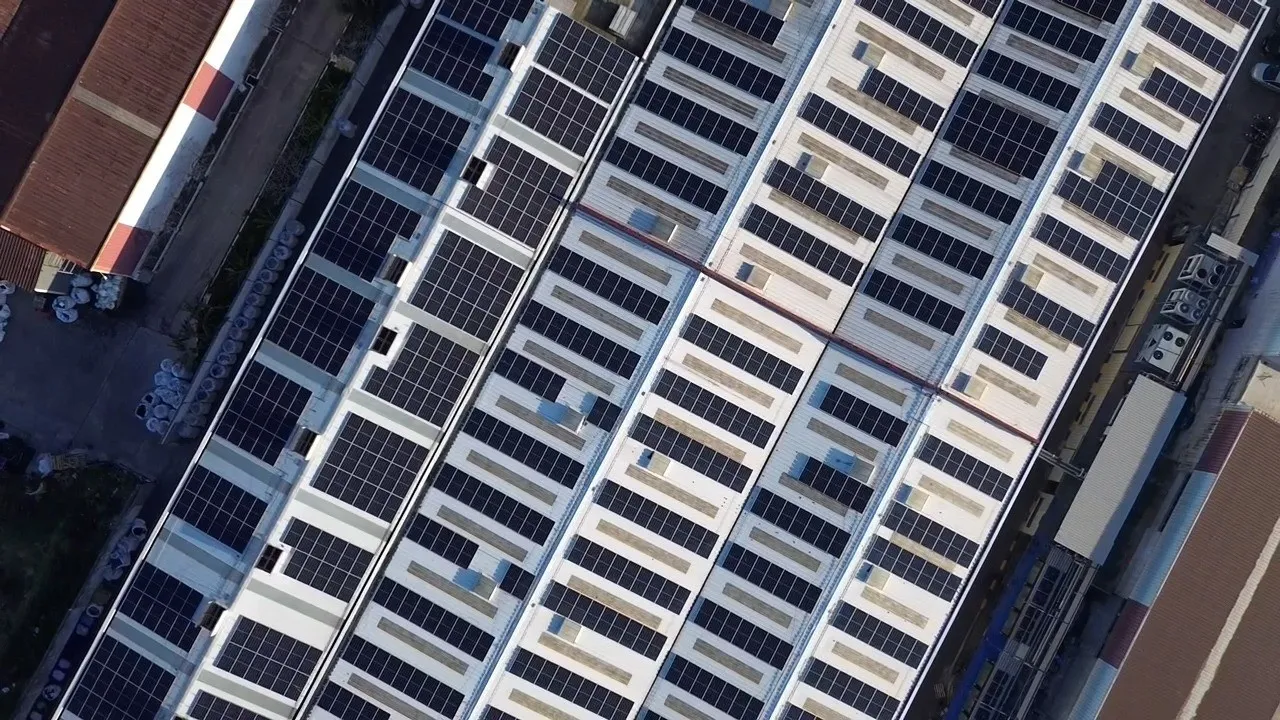
The decarbonization of the energy matrix consists of progressively reducing dependence on fossil fuels and increasing the share of renewable energies, energy efficiency, and systems with lower impact in production, transport, and consumption.
In Spain, this process is part of a broad regulatory strategy. Law 7/2021, on climate change and energy transition, establishes the framework for moving towards climate neutrality, while the Long-Term Decarbonization Strategy 2050, or ELP 2050, sets the path to achieve a climate-neutral economy no later than 2050. The MITECO indicates that the ELP will allow Spain to reduce its greenhouse gas emissions by 90% compared to 1990 before 2050.
For companies, this transition is not limited to contracting renewable energy. It involves reviewing processes, machinery, consumption, efficiency, logistics flows, suppliers, and raw materials. In the case of manufacturing companies in Spain, industrial decarbonization directly affects how products are made, what energy is consumed, what manufacturing machines are used, and how resources are optimized.
Furthermore, there are public and financial instruments that support this process, such as aid for decarbonization, the PERTE for industrial decarbonization, green bonds, or mechanisms linked to the regulated emissions market. In Spain, the PERTE-DI managed by SEPIDES seeks to promote decarbonization projects in productive processes of the manufacturing industry.
Importance of Scope 3 Emissions
One of the biggest challenges for retail lies in Scope 3 emissions.
Scope 1 emissions are direct emissions from the company. Scope 2 emissions come from purchased energy. But Scope 3 includes other indirect emissions generated throughout the value chain: suppliers, transport, materials, purchased products, waste, travel, distribution, or product use and end-of-life.
In sectors like fashion and retail, Scope 3 typically accounts for a very significant portion of the total footprint, precisely because the activity depends on global networks of supply, materials, external manufacturing, logistics, and distribution.
This changes how sustainability is managed. A brand cannot reduce its impact by only looking at its own facilities. It needs to work with suppliers, manufacturers, logistics operators, waste managers, and industrial partners capable of providing data, efficiency, and circular solutions.
The reduction of the carbon footprint in retail therefore requires action across the entire chain. Better material selection, reducing unnecessary travel, optimizing packaging, recovering products, reusing supports, recycling waste, and reintroducing resources into new cycles.
In this context, tools such as carbon bonds or carbon credits also appear, which can be part of broader climate strategies. However, for the retail supply chain, the priority must be to reduce real emissions within the operation before resorting to offsetting mechanisms.
What is the Decarbonization Process Like?
The decarbonization process begins with measurement. Without data, it is difficult to know where emissions are generated, which processes have the most impact, and what decisions can produce real improvements.
The first step is to identify emission sources and classify them by Scope 1, 2, and 3. Then, the company must analyze energy consumption, materials, transport, waste, suppliers, and production processes. From there, it can define objectives, prioritize actions, and establish monitoring indicators.
In a retail supply chain, the process usually includes several lines of work:
- Improve energy efficiency in facilities and processes.
- Incorporate renewable energies.
- Review materials and raw materials.
- Reduce waste and improve its valorization.
- Optimize routes, loads, and reverse logistics.
- Work with suppliers aligned with ESG criteria.
- Advance in industrial ecodesign and circular economy.
- Measure progress and communicate traceable results.
Decarbonization does not happen in a single phase. It is a continuous process that combines technology, management, investment, collaboration, and operational change.
It must also be understood within the regulatory context. The EU ETS, the European Union Emissions Trading System, functions as a regulated market that puts a price on emissions in certain sectors and activities. Although not all retail companies are directly subject to the EU ETS, its evolution influences energy costs, industrial suppliers, and investment decisions. MITECO offers guides and documentation on the EU ETS and its procedures.
How to Achieve Decarbonization in the Retail/Fashion Sector
To achieve decarbonization in the retail and fashion sector, companies must shift from a product-centric vision to a value chain vision. The question is no longer solely how to reduce the impact of a garment, but how to reduce the impact of everything that allows it to be produced, moved, displayed, sold, its supports recovered, and its waste managed.
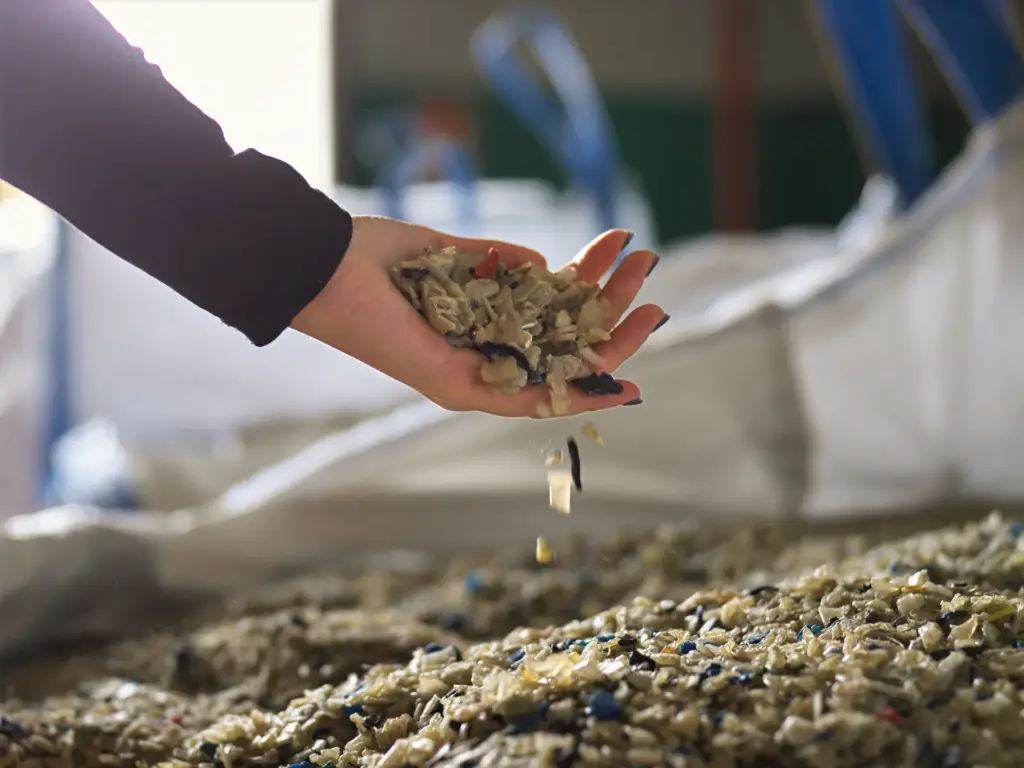
At this point, Erum brings particularly relevant expertise. Its industrial knowledge in Circular Economy, industrial ecodesign, plastics transformation, recycled raw materials, reverse logistics, recovery, reuse, recycling, and recirculation allows it to intervene at various layers of the value chain.
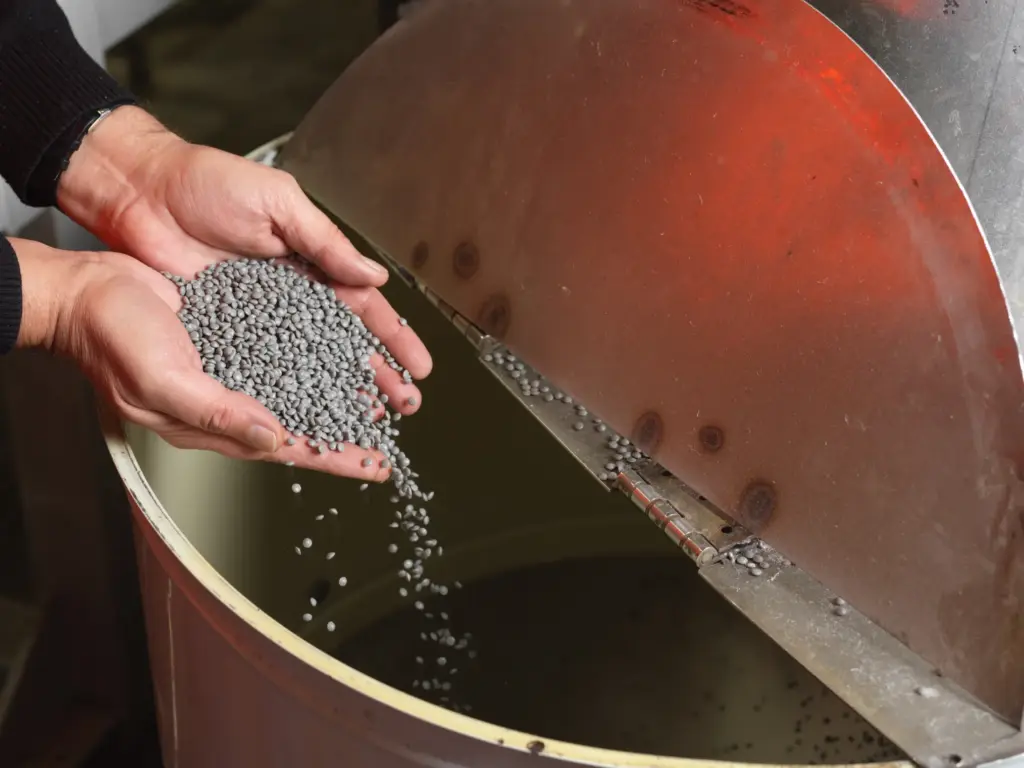
This vision helps fashion and retail brands address decarbonization from real operations; the materials they use, the products that accompany the garment, the waste they generate, the flows that can be recovered, and the resources that can return to the system.
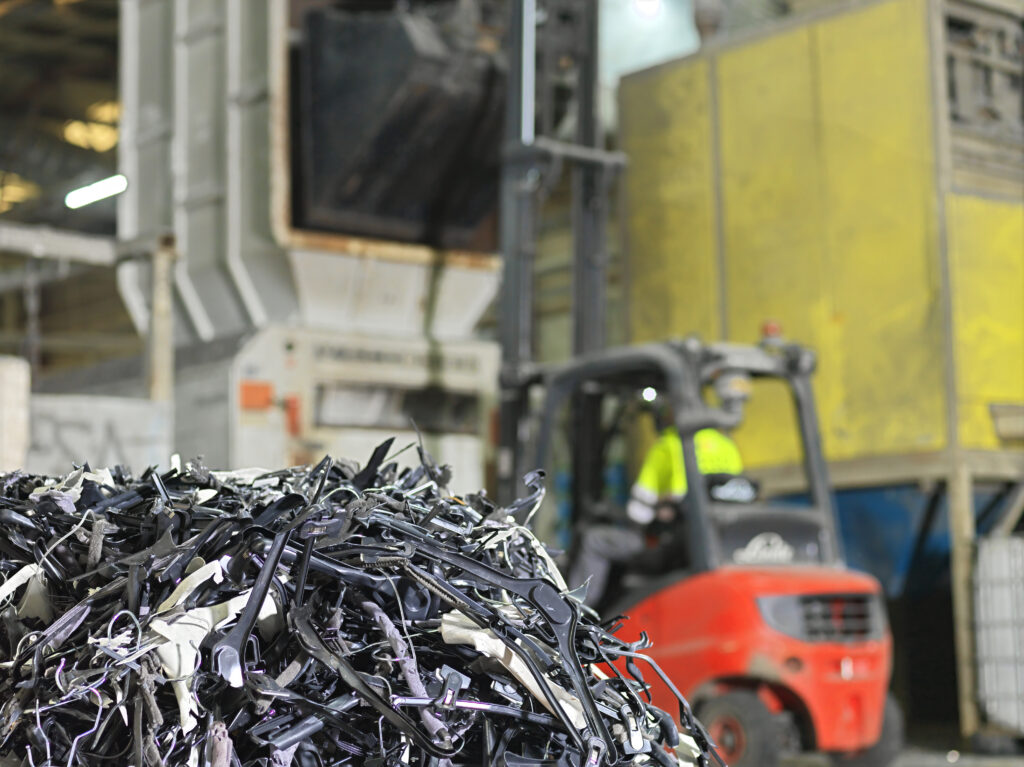
In fashion retail, this translates into concrete solutions such as the RTS system for recovering and recirculating hangers and other operational flows in retail. Every product that returns to the system, every support that can be reused, every material that is recycled, and every waste managed with greater value contributes to a more efficient operation aligned with ESG objectives.
It also involves supporting brands in identifying opportunities for improvement. Through Circular Strategy Consulting, Erum can help analyze flows, materials, and processes to define circular models adapted to each client’s operational reality.
Retail decarbonization will not depend on a single action. It requires a sum of connected decisions: cleaner energy, more efficient processes, better selected materials, less waste generation, more reuse, more recycling, and greater capacity to recover value within the chain.
Do you want to move towards a more circular and efficient retail supply chain? Let’s talk about how to rethink your materials, processes, and recovery flows.
Frequently Asked Questions
What is the decarbonization of the economy?
The decarbonization of the economy is the process of progressively reducing greenhouse gas emissions associated with economic activity. It involves transforming how energy is produced, goods are manufactured, products are transported, resources are consumed, and waste is managed.
Its goal is to move towards a climate-neutral economy, capable of reducing its contribution to climate change and global warming.
What is Spain’s Long-Term Decarbonization Strategy 2050?
The Long-Term Decarbonization Strategy 2050, also known as ELP 2050, is Spain’s roadmap to achieve climate neutrality no later than 2050. It was approved by the Government of Spain at the proposal of MITECO and aligns with European objectives for ecological transition and emissions reduction.
The ELP 2050 defines a transformation path for sectors such as energy, industry, transport, building, agriculture, and waste, and seeks to guide investments, public policies, and business decisions towards a modern, competitive, and climate-neutral economy.
What are Scopes 1, 2, and 3?
Scopes 1, 2, and 3 are categories used to classify an organization’s greenhouse gas emissions.
Scope 1 includes direct emissions generated by sources owned or controlled by the company.
Scope 2 includes indirect emissions associated with purchased and consumed energy by the company.
Scope 3 includes other indirect emissions that occur throughout the value chain, such as suppliers, transport, materials, purchased products, waste, distribution, or product end-of-life.
In retail and fashion, Scope 3 is particularly relevant because a large part of the impact is outside the brand’s own facilities.