
Sustainability is proven when it can be sustained over time, at volume, and in real markets.
In 2025, Erum surpassed 175 million recirculated hangers. A figure that should not be read only as an environmental KPI, but as proof of operational capability.
Recirculating at this scale means coordinating flows, collection points, sorting centres, reverse logistics, industrial processes, and technical decisions across an international supply chain. It means retail circularity can move beyond discourse and work within the day-to-day operations of major fashion brands.
Because designing a circular solution is one thing. Making it work millions of times is quite another.
Retail circularity at international scale
The fashion sector operates with large volumes, constant turnover, and a presence across multiple markets. Each garment triggers a complex chain of production, transport, display, removal, recovery, and replenishment.
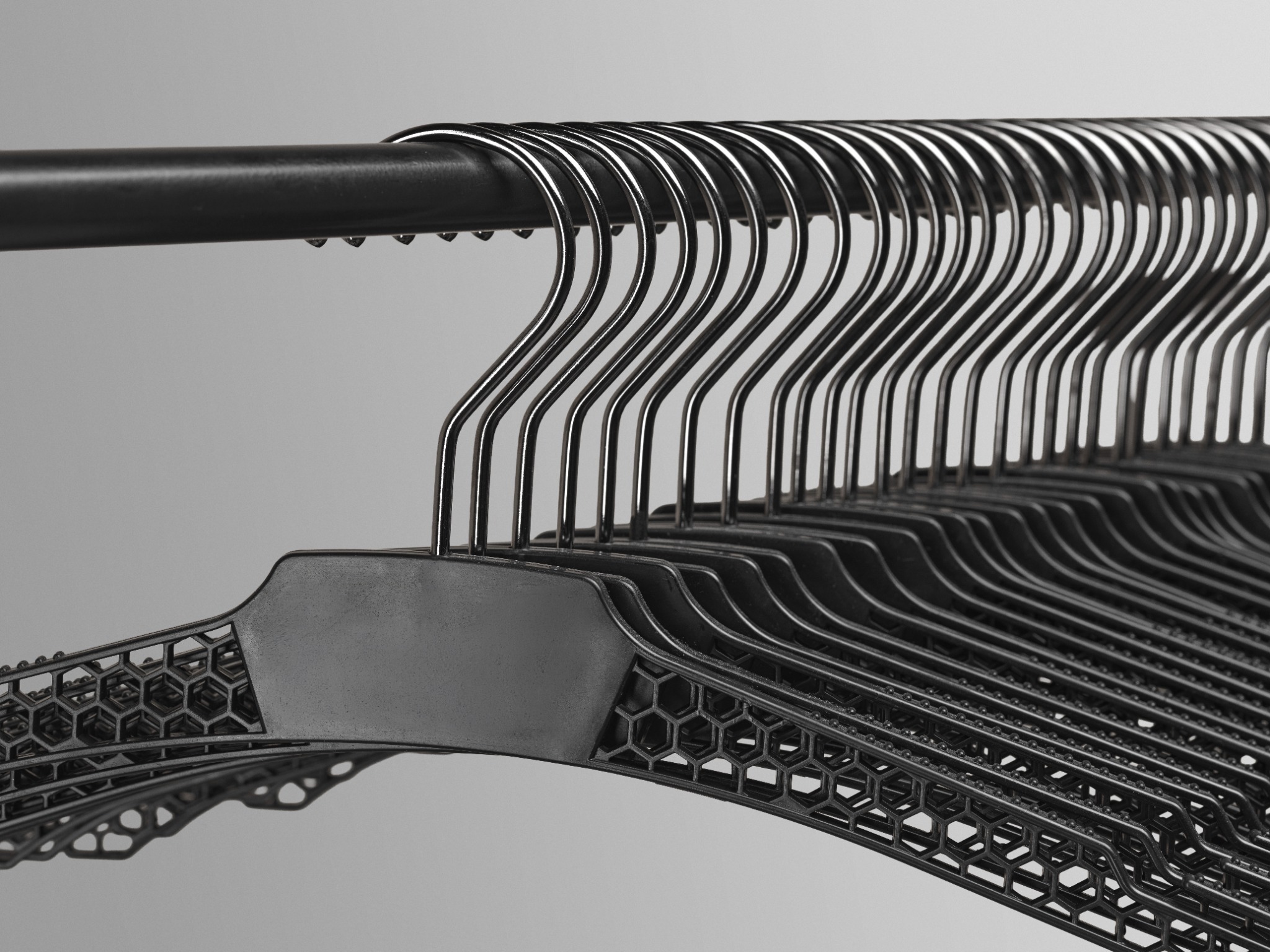
In that context, a hanger may seem like a small item. But when it is managed in millions of units, it becomes a clear test of how circularity actually works within retail.
The figure of +175 million recirculated hangers reflects an infrastructure designed to manage volume, continuity, and complexity. This is not a one-off action, but a model capable of operating recurrently and in a coordinated way.
That is the real value: turning an everyday item into part of an international circular system.
RTS: an infrastructure to bring products back into the loop
The RTS ( Return to Source) system enables hangers used by fashion brands to return to the loop instead of falling out of the system after their first use.
Through reverse logistics, hangers are collected, moved to specialised centres, and sorted according to their condition. From there, the best possible destination is defined: reuse, repair, recycling, or material recovery.
This capability is complemented by a global RTS network that makes it possible to adapt the model to different operations, markets, and volumes. In certain projects, this system has achieved reuse rates of up to 90% for products such as hangers, reinforcing its role as circular infrastructure for fashion retail.
The difference lies in the ability to manage this process at scale. RTS does not operate as a standalone solution, but as circular infrastructure connected to the retail supply chain. This enables brands to advance in sustainability without disconnecting circularity from their operational reality: volume, lead times, costs, logistics, traceability, and efficiency.
What this figure shows
Surpassing 175 million hangers recirculated in 2025 shows that Erum does not only design circular solutions. It also has the industrial and logistics capability to operate them.
This figure speaks to scale, continuity, and international experience. But above all, it demonstrates Erum’s ability to combine technical expertise, logistics, and industry in a model capable of turning potential waste into available resources.
It also demonstrates something especially relevant for fashion brands: circularity can be integrated into real retail operations when there is a partner capable of managing the full cycle.
For a customer, this means working with a system that helps reduce waste, make better use of materials, organise return flows, and strengthen their sustainability goals and ESG reporting.
A different way of understanding sustainability
Circularity is not measured only by the intention to recover a product. It is measured by the ability to bring it back into the loop again and again, across different markets, at high volumes, and with processes designed to preserve the greatest possible value.
That is the purpose of RTS.
An infrastructure that enables products such as hangers to return to the system, be managed correctly, and continue generating value within the supply chain.
At Erum, Rethinking the circular era means turning sustainability into an operational capability.
Because the future of retail will not depend only on designing more circular products.
It will also depend on having systems capable of circulating them at scale.