
Recycled plastic for industrial production as a modern raw material
Recycled plastic has become a key raw material for industry. For years, many plastic wastes were treated as the end of a process. Today, thanks to the evolution of technology, sorting, transformation, and waste management, they can once again become useful resources for new production cycles.
This change is important. Industry needs to manufacture better, reduce the consumption of virgin raw materials, take advantage of existing materials, and move towards more efficient models. In this context, recycled plastic as a raw material allows for the connection of production, sustainability, and circular economy from an industrial perspective.
It is not just about recycling more. It is about making better use of recycled plastic materials, knowing their characteristics, and selecting the appropriate type according to the application, the production process, and the technical requirements of each product.
Why consider recycled plastic as a raw material in industry?
Using recycled plastic in industrial production allows for the utilization of materials that have already had a first life and still retain value. Through recovery, sorting, recycling, and transformation processes, much waste can be re-incorporated into the production chain.
This decision addresses several current challenges. Pressure on resources, the need to reduce industrial waste, the demand for solutions with lower environmental impact, and the evolution of sustainability requirements are driving many companies to review their materials.
Recycled plastic can be used in packaging, technical components, retail products, industrial parts, furniture, home solutions, and many other applications. Its use will depend on the type of polymer, its quality, its origin, its mechanical properties, its density, its compatibility with the manufacturing process, and the requirements of the final product.
Therefore, working with recycled plastic requires technical knowledge. The key lies in selecting the right material and controlling the process so that the final solution maintains functionality, resistance, and quality.
Differences between recycled plastic and virgin plastic
Virgin plastic comes directly from fossil raw materials or primary sources and is manufactured without having had a previous use. Its composition is usually more homogeneous and predictable, which facilitates the control of properties such as resistance, color, thermal behavior, or dimensional stability.
Recycled plastic, on the other hand, comes from recovered waste. It can come from packaging, industrial waste, post-consumer products, or production surpluses. Before being used as a raw material, it must be collected, sorted, cleaned, crushed, transformed, and validated.
The main difference lies in the origin of the material. However, there can also be differences in color, purity, traceability, mechanical properties, odor, presence of fillers, flowability, density, or stability between batches.
This does not mean that recycled plastic is a lower quality option. It means that it requires control. When the material is correctly selected and the process is well adjusted, it can offer suitable performance for numerous industrial applications.
Industry should not have to choose between sustainability and quality. It must learn to manufacture with recycled materials under technical criteria, validation, and process control.
Second life of plastic
The second life of plastic begins when waste is no longer understood as a problem and becomes a new raw material.
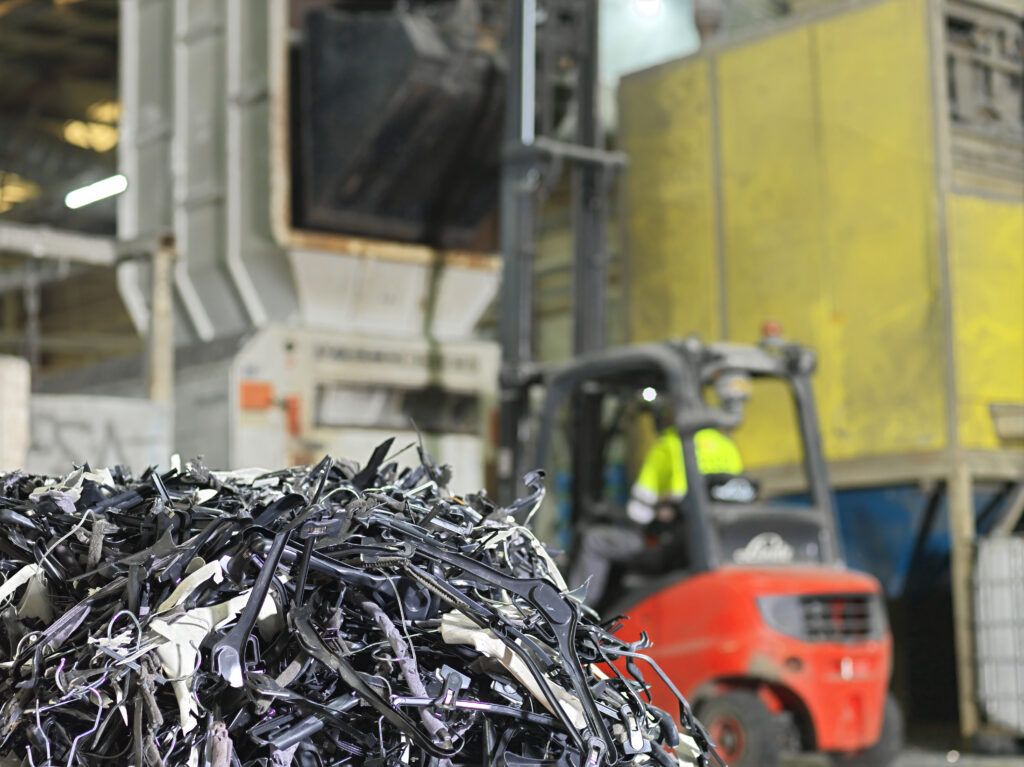
A package, a technical part, a hanger, an industrial component, or a plastic product at the end of its use can continue to generate value if managed correctly. To do this, it is necessary to collect the material, separate it by type, analyze its quality, and transform it into a resource suitable for new processes.
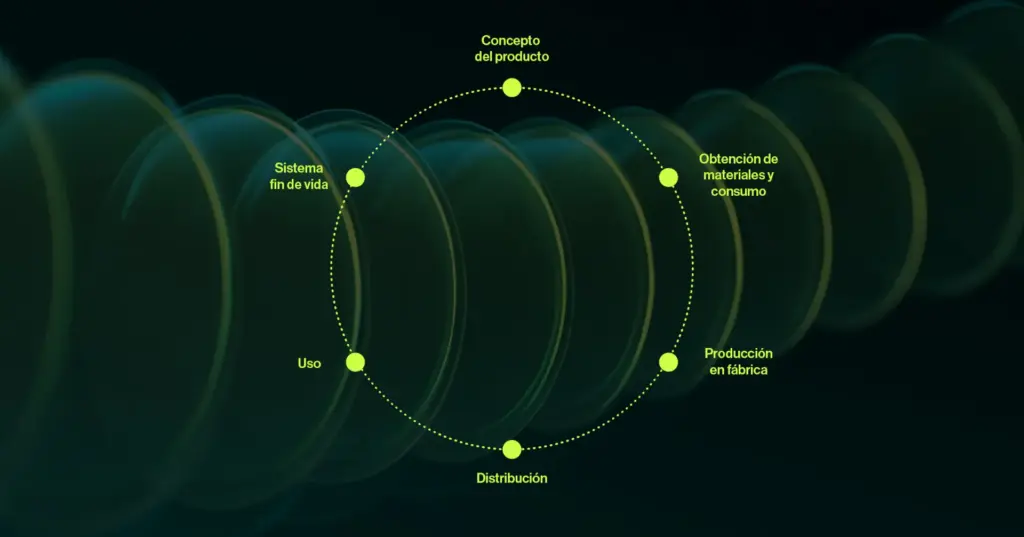
This approach connects directly with the circular economy. Instead of manufacturing, using, and discarding, circularity proposes keeping materials in use for longer, reducing value losses, and re-incorporating resources into the system.
The second life of plastic does not depend solely on recycling. It also depends on the initial design of the product, the ease of separation, material compatibility, the existence of recovery systems, and the industrial capacity to transform it again.
When a company designs and produces with that second life in mind, recycled plastic stops being an occasional alternative and becomes part of a more sustainable manufacturing strategy.
Plastic recycling processes
There are different ways to recycle plastics, but the two main ones are mechanical recycling and chemical recycling. Each responds to different needs and offers different results depending on the type of waste, its composition, its state, and the subsequent use of the recovered material.
Mechanical recycling of plastic
Mechanical recycling is the most widespread process for transforming plastic waste into new raw material.
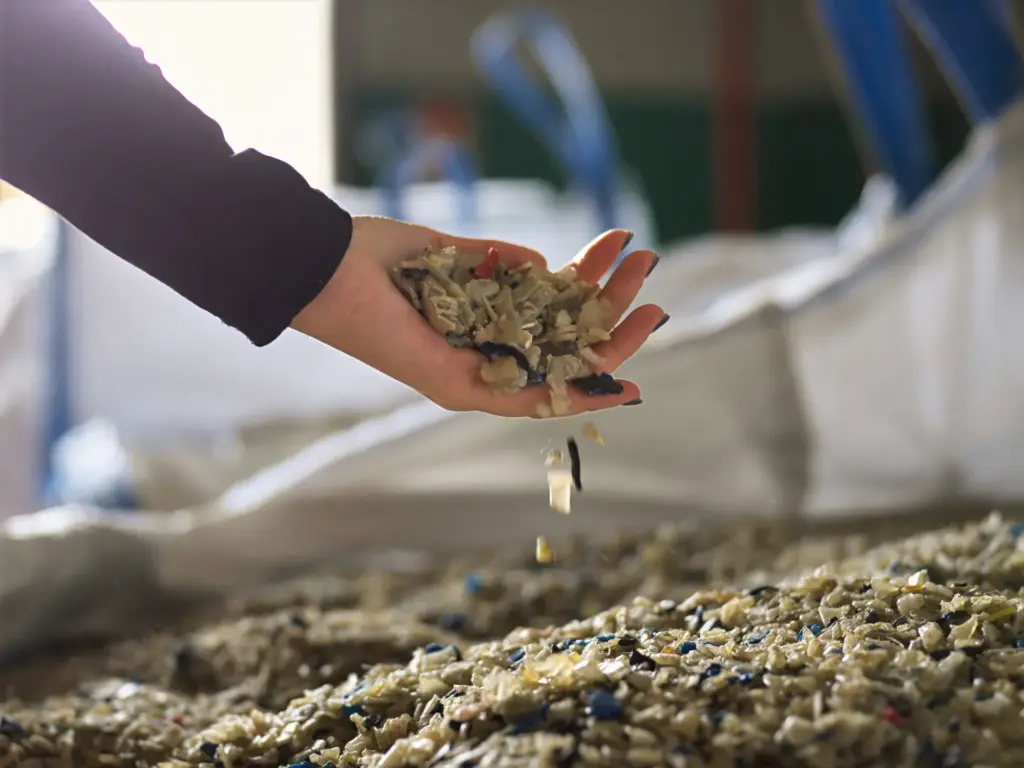
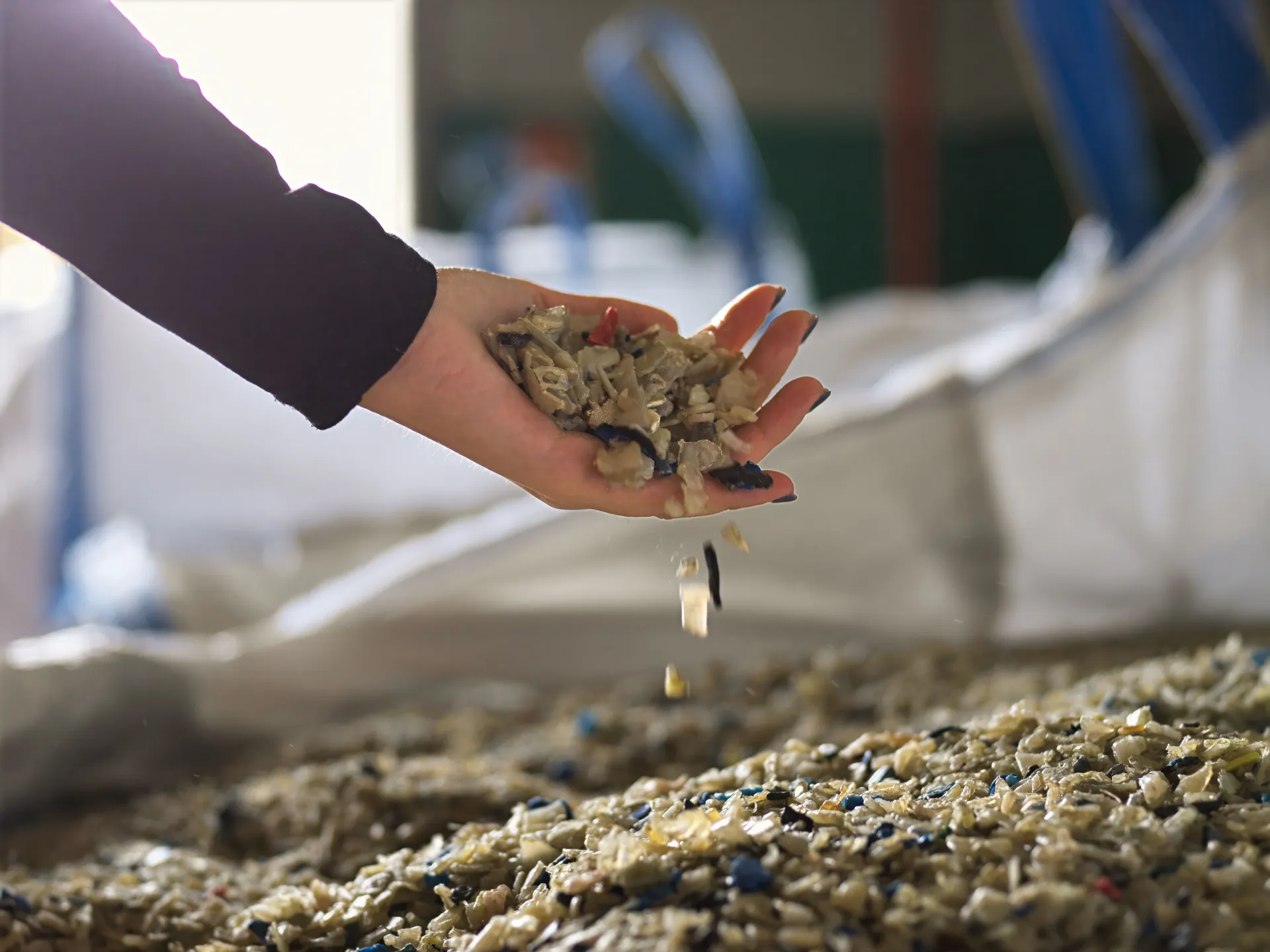
It consists of collecting, sorting, cleaning, crushing, and processing the plastic to turn it into flakes, pellets, or other formats reusable in manufacturing. This process does not modify the chemical structure of the polymer, but physically transforms the material so that it can be used again.
It is especially suitable for well-identified, separated, and clean plastic waste, such as certain packaging, homogeneous industrial waste, or products manufactured with a single material.
Its advantages include efficiency, lower technological complexity, and its capacity to re-incorporate recycled plastic materials into industrial processes such as extrusion, blow molding, or recycled plastic injection.
Its main challenge lies in the quality of the input waste. The better sorted and less contaminated the material is, the higher the quality of the resulting recycled plastic.
Chemical recycling of plastics
Chemical recycling groups processes that break down plastic at a molecular level to obtain monomers, oils, gases, or other compounds that can be used again as raw material.
Unlike mechanical recycling, chemical recycling does alter the structure of the material. It can be useful for more complex waste, mixtures difficult to recycle mechanically, or contaminated plastics that cannot be treated through conventional processes.
This type of recycling can expand the recovery possibilities of certain materials, although it usually requires greater technological investment, energy control, and environmental assessment.
Its role will be relevant in some specific flows, but it does not replace mechanical recycling. Both processes can coexist within a broader plastic waste management strategy.
Types of recycled plastics
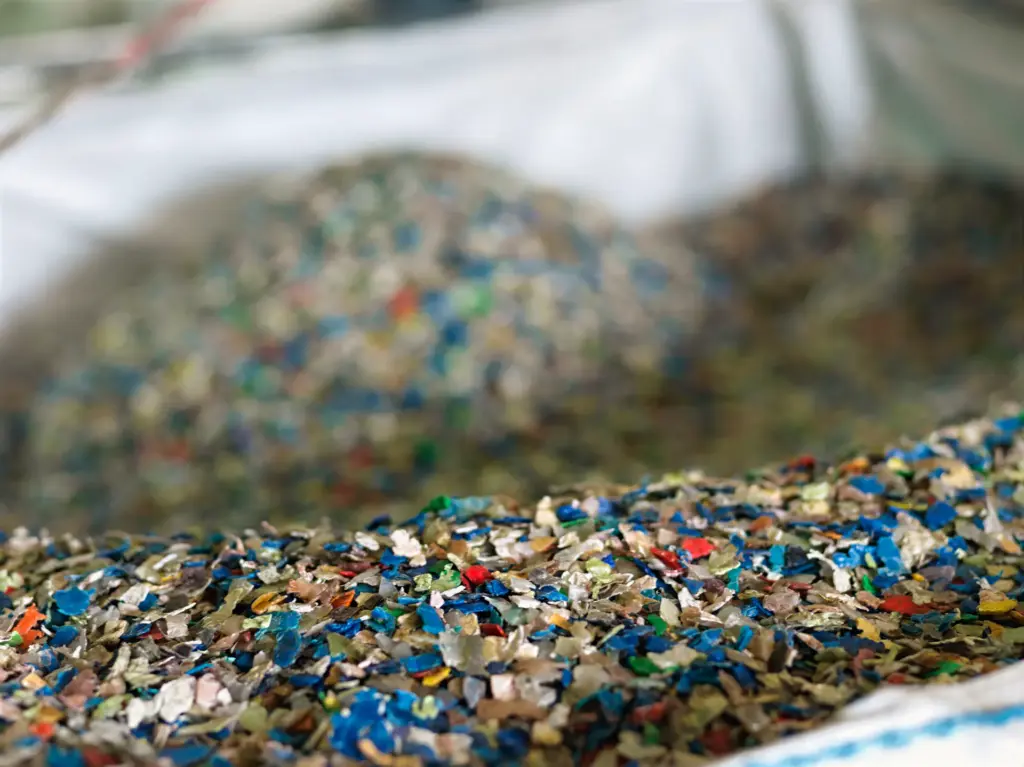
Recycled plastics are not all the same. Each polymer has different properties, applications, and recycling possibilities. Therefore, before incorporating recycled plastic into a production process, it is important to know the type of material, its origin, its main characteristics, and its behavior in manufacturing.
Recycling can come from mechanical or chemical processes, although in many industrial applications mechanical recycling remains the most common when the waste is correctly separated and presents sufficient quality.
PET or PETE, polyethylene terephthalate
PET is one of the best-known and most recycled plastics, especially due to its presence in beverage containers, trays, textile fibers, and certain packaging products.
Recycled PET usually comes mainly from mechanical recycling, from bottles, packaging, and other correctly sorted post-consumer waste. It can also be obtained through chemical recycling in applications where the goal is to recover molecular components for new processes.
Its characteristics include transparency, lightness, resistance, good gas barrier properties, and ease of transformation. In industrial production, it can be used in new packaging, sheets, fibers, strapping, technical textiles, or components that do not require food contact, except when the material meets the corresponding authorizations.
Its recyclability is high when the material is clean, separated, and free of mixtures that hinder the process.
HDPE or PEAD, high-density polyethylene
HDPE, also known as PEAD, is a resistant, rigid plastic material with good chemical resistance. It is commonly used in cleaning product containers, jugs, drums, pipes, containers, caps, boxes, and technical parts.
Recycled HDPE usually comes from mechanical recycling. The waste is sorted, cleaned, crushed, and transformed into pellets for new production processes.
Its main characteristics include good impact resistance, low moisture absorption, durability, and a density higher than that of low-density polyethylene. In industrial production, it can be used in non-food packaging, street furniture, containers, injected parts, pipes, pallets, or technical components.
Its recyclability is good, especially when it comes from homogeneous and well-separated flows.
PVC, polyvinyl chloride
PVC is a versatile, resistant, and durable plastic used in pipes, profiles, coatings, cables, flooring, sheets, carpentry, and technical products.
Recycled PVC can be obtained through mechanical recycling when the material is correctly identified and separated. In some cases, its composition with additives, plasticizers, or other components requires more specific management.
Its characteristics depend on whether it is rigid or flexible PVC. Rigid PVC offers good mechanical resistance and durability. Flexible PVC provides elasticity, although its recycling can be more complex due to the presence of additives.
In industrial production, recycled PVC can be used in profiles, pipes, flooring, sheets, construction elements, technical components, or products where it is possible to control the material’s composition.
Its recyclability is possible, but it requires proper separation and control over the additives present.
LDPE or PEBD, low-density polyethylene
LDPE, or PEBD, is a flexible, lightweight, and moisture-resistant material. It is frequently used in bags, films, sheets, flexible packaging, wraps, coatings, and soft containers.
Recycled LDPE usually comes from mechanical recycling, especially from correctly separated films and plastic packaging. Its treatment can be more demanding when the waste is contaminated or mixed with other materials.
Its characteristics include flexibility, low density, good chemical resistance, and ease of processing. In industrial production, it can be used in bags, recycled films, sheets, flexible pipes, agricultural products, packaging, or components with low structural requirements.
Its recyclability is good when the waste is clean and separated, although very thin or contaminated films may present greater difficulties.
PP, polypropylene
PP is one of the most used plastics in industry due to its balance of strength, lightness, rigidity, thermal stability, and good processability. It is used in packaging, caps, automotive components, household items, hangers, boxes, injected parts, non-woven textiles, and technical solutions.
Recycled PP comes mainly from mechanical recycling, both from industrial waste and post-consumer products. It can also be part of developments linked to chemical recycling in more complex flows.
Its characteristics make it a particularly interesting material for injection processes. It has low density, good chemical resistance, good fatigue behavior, and high versatility for industrial products.
In production, recycled PP can be used in hangers, technical components, retail products, boxes, non-food packaging, automotive parts, housewares, furniture, and industrial solutions.
Its recyclability is high when the flow is well classified and the material maintains sufficient quality for the intended use.
PS, polystyrene
PS is a rigid, lightweight plastic that is easy to transform. It can be found in packaging, trays, disposable cutlery, rigid components, packaging, and, in its expanded version, in transport protection or insulation.
Recycled PS can be obtained through mechanical recycling when the waste is clean and separated. In the case of expanded polystyrene, the main challenge is its large volume and low density, which complicates recovery logistics.
Its characteristics include rigidity, lightness, ease of molding, and good capacity for low-weight products. In industrial production, it can be used in rigid components, packaging, protection products, molded parts, or applications where high impact resistance is not required.
Its recyclability depends heavily on the format, cleanliness, and logistical feasibility of its recovery.
Mixed plastics
Mixed plastics come from flows where different polymers or materials difficult to separate coexist. They can include multilayer packaging, complex industrial waste, post-consumer mixtures, or products with several components.
Their recycling is usually more complex. In some cases, they can be treated through mechanical recycling for applications with lower technical requirements. In others, they may require chemical recycling processes or specific recovery.
The characteristics of mixed plastics are less homogeneous and more variable. Therefore, their use in industrial production is usually oriented towards applications where aesthetic or mechanical stability is not as critical, such as certain construction products, street furniture, auxiliary elements, profiles, panels, or parts with low technical requirements.
Their recyclability is more limited and depends on the composition, separation, flow quality, and available technology.
Summary table of recycled plastic characteristics
| Name and acronym | Main characteristics | Common uses | Recyclability |
| PET or PETE | Lightweight, resistant, transparent, good gas barrier | Packaging, sheets, fibers, strapping, technical textiles | High if clean and separated |
| HDPE or PEAD | Rigid, impact resistant, good chemical resistance | Jugs, drums, pipes, boxes, containers, technical parts | Good in homogeneous flows |
| PVC | Durable, resistant, rigid or flexible depending on formulation | Pipes, profiles, flooring, cables, sheets, construction | Possible with separation and additive control |
| LDPE or PEBD | Flexible, lightweight, low density, moisture resistant | Films, bags, packaging, sheets, agricultural products | Good if clean and separated |
| PP | Lightweight, rigid, versatile, good chemical and thermal resistance | Hangers, boxes, packaging, automotive, housewares, injected parts | High in well-sorted flows |
| PS | Rigid, lightweight, easy to mold, low impact resistance | Trays, packaging, rigid parts, transport protection | Variable depending on format and logistics |
| Mixed plastics | Variable composition, lower homogeneity, difficult separation | Profiles, panels, street furniture, auxiliary parts | Limited and technology-dependent |
Benefits of using recycled plastic as a raw material
The use of recycled plastic in industrial production offers environmental, technical, and strategic benefits when applied with judgment. Its value lies not only in replacing one material with another, but in integrating recovered resources into more efficient production models.
Reduces the consumption of virgin raw materials
Incorporating recycled raw materials allows for a reduction in dependence on virgin resources and the utilization of materials that already exist within the system.
This is especially relevant in industries that work with large production volumes and need to move towards more sustainable models without losing operational capacity.
Decreases the generation of plastic waste
When plastic waste is recovered and transformed into raw material, it is prevented from ending up in landfills, incineration, or low-value circuits.
Recycled plastic thus contributes to reducing waste accumulation and improving the utilization of materials that can still generate value.
Contributes to reducing environmental impact
The use of recycled materials can help decrease the environmental impact associated with resource consumption, waste management, and certain production processes.
The key lies in evaluating each case with technical and environmental criteria, taking into account the origin of the material, its recycling process, its transport, its transformation, and its useful life.
Promotes the reduction of emissions associated with production
In many applications, using recycled plastic can contribute to reducing emissions associated with the extraction and production of virgin raw material.
This advantage will depend on the type of polymer, the recycling process, the logistical distance, energy consumption, and the final application.
Drives the circular economy
Recycled plastic is a fundamental piece for moving towards a more circular industrial economy.
It allows waste to return to the system, materials to be kept in use for longer, and production to depend less on resources extracted from scratch.
This approach connects directly with the need to move from linear models to systems where products and materials can be recovered, recycled, and generate value again.
Allows for the utilization of resources and materials for longer
Every time a recycled material is re-incorporated into production, its utility is prolonged and value loss is reduced.
This requires having collection, sorting, transformation, and control systems. Therefore, recycled plastic should not be understood as an isolated material, but as the result of a complete recovery and value creation chain.
Helps companies move towards more sustainable production models
Recycled plastic allows companies to move towards production models aligned with sustainability, resource efficiency, and impact reduction.
To achieve this, it is necessary to work from a complete vision that connects product design, material selection, industrial processes, quality control, and comprehensive waste management.
At Erum Group, this vision is part of a way of understanding industry through circularity. Transforming waste into resources, re-incorporating recovered materials, and developing solutions prepared for a second life allows for better manufacturing, using less, and generating more value with what already exists.